




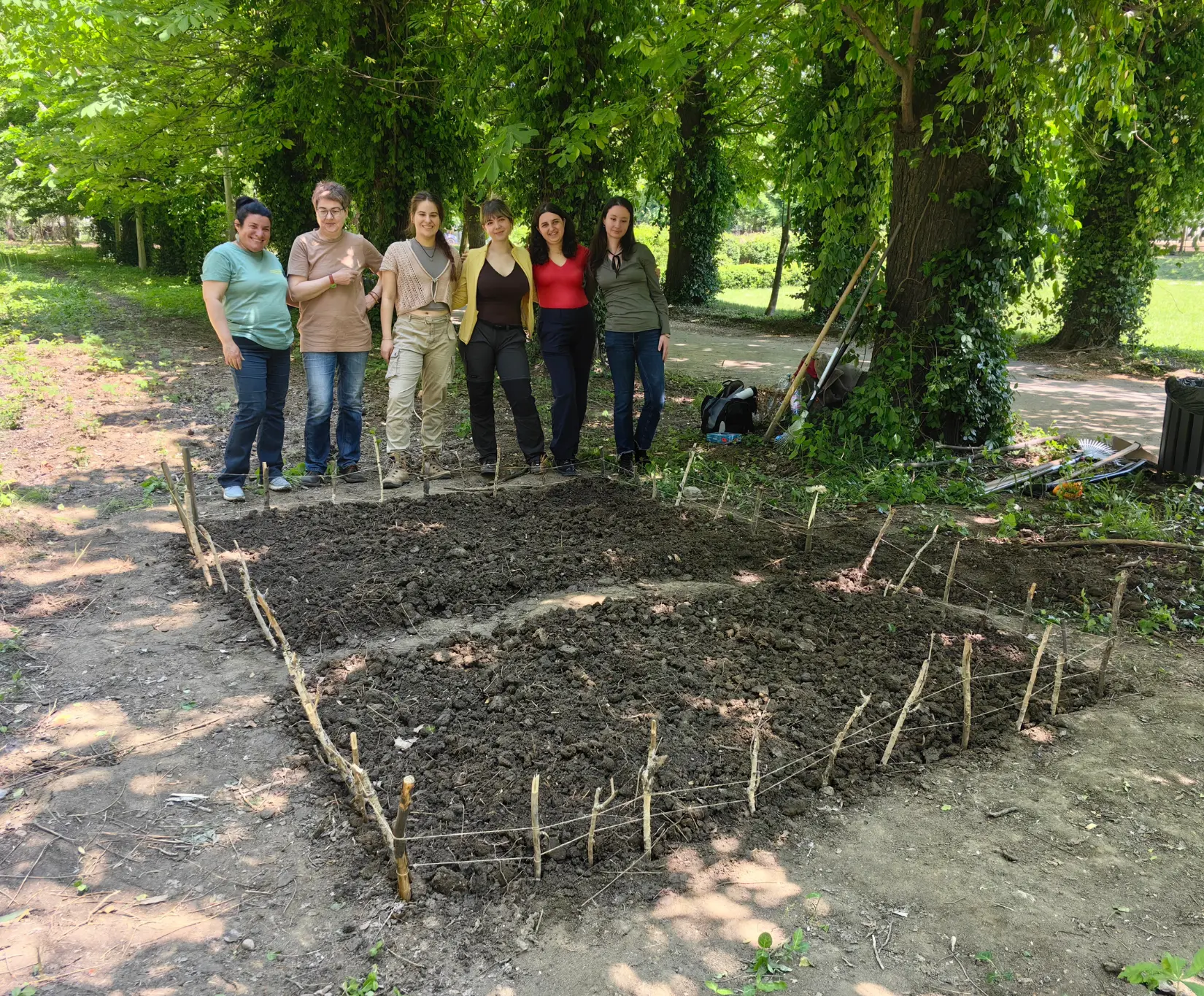
On Wednesday, 6 May 2026, the University of Bucharest, through the ArchaeoSciences Platform of the Research Institute of the University of Bucharest (ASp-ICUB), organized an experimental planting session in collaboration with the “D. Brandza” Botanical Garden and the Faculty of Biology.
Part of the intensive hybrid course “Archaeobotanical Contributions to Understanding the Non-/Human Past,” the activity provided students with the opportunity to explore, in a practical setting, the physical and social dimensions of early agriculture.
The course is coordinated by Dr. Dragana Filipović, visiting professor at ICUB and researcher at the University of Algarve. The planting session was co-organized by Sebastian-Valeriu Dumitrescu, PhD student and research assistant within the ArchaeoSciences Platform. Students from the Faculty of Biology worked alongside researchers and Botanical Garden staff, using exclusively manual tools (spades, hoes, rakes), without any mechanized equipment. The activity involved preparing a plot within the Botanical Garden, processing the soil through digging and loosening, constructing a simple wattle fence around the perimeter, and planting a mixture of seeds, including both species documented in prehistoric contexts (ancient wheat, barley, millet) and modern plants (tomatoes, peppers). Participants also manually transported water for irrigation, recreating stages and activities likely performed by early farmers.
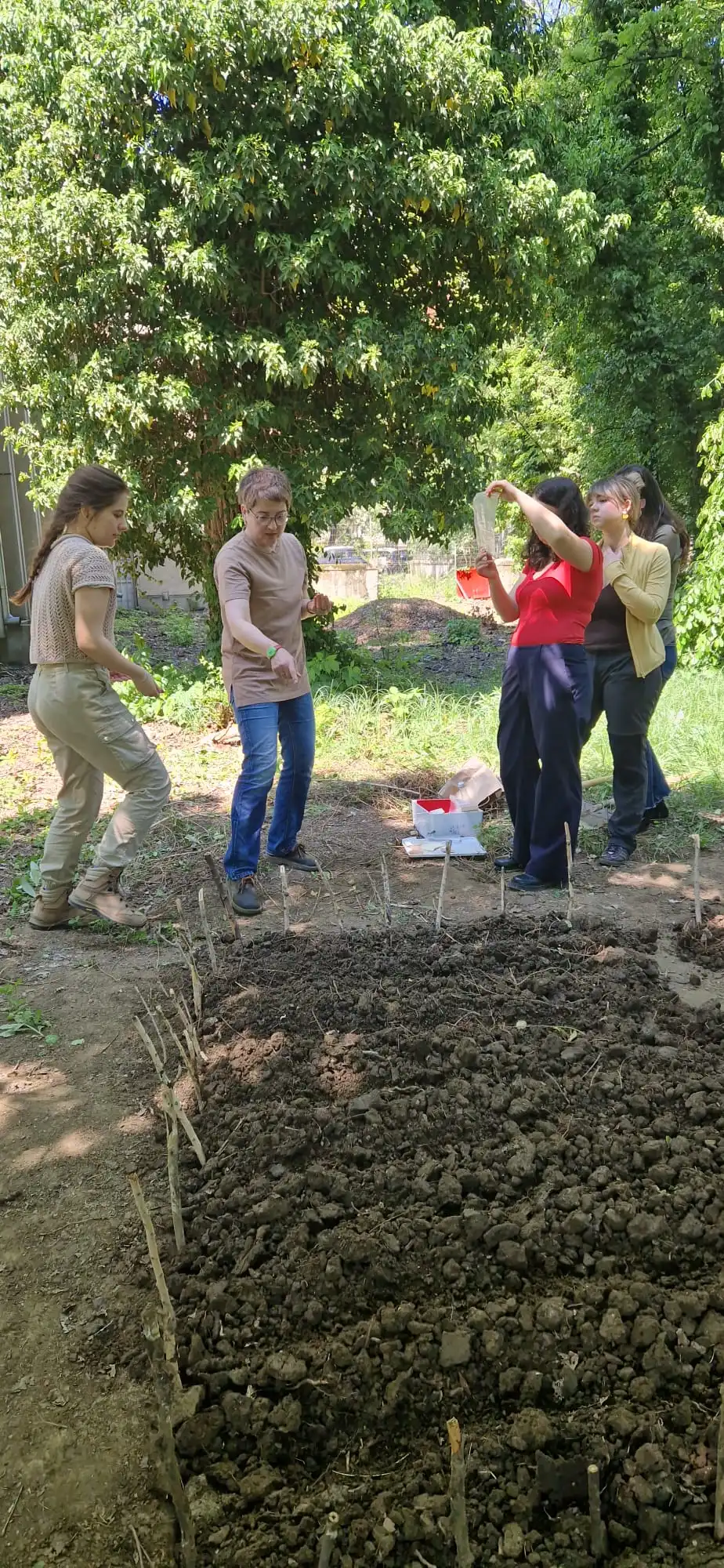
The exercise enabled students to take part in an experimental study: by measuring the duration of activities and through subjective assessments of physical effort (clearing the land, digging, fencing, watering), participants gained a direct understanding of the caloric and physical costs involved in early agricultural practices. This approach opened new avenues of reflection regarding how daily activities may have influenced social organization, division of labor, and community structures in prehistory—topics that remain insufficiently explored in current archaeological research.
The experimental planting represented one of the practical components of the course’s hybrid curriculum. Previous sessions included flotation and sieving of archaeobotanical samples, microscopic analysis of plant remains, and work with archaeobotanical databases. These practical activities complement the lectures and contribute to familiarizing students with both the methodological potential and interpretative limitations of archaeobotany.
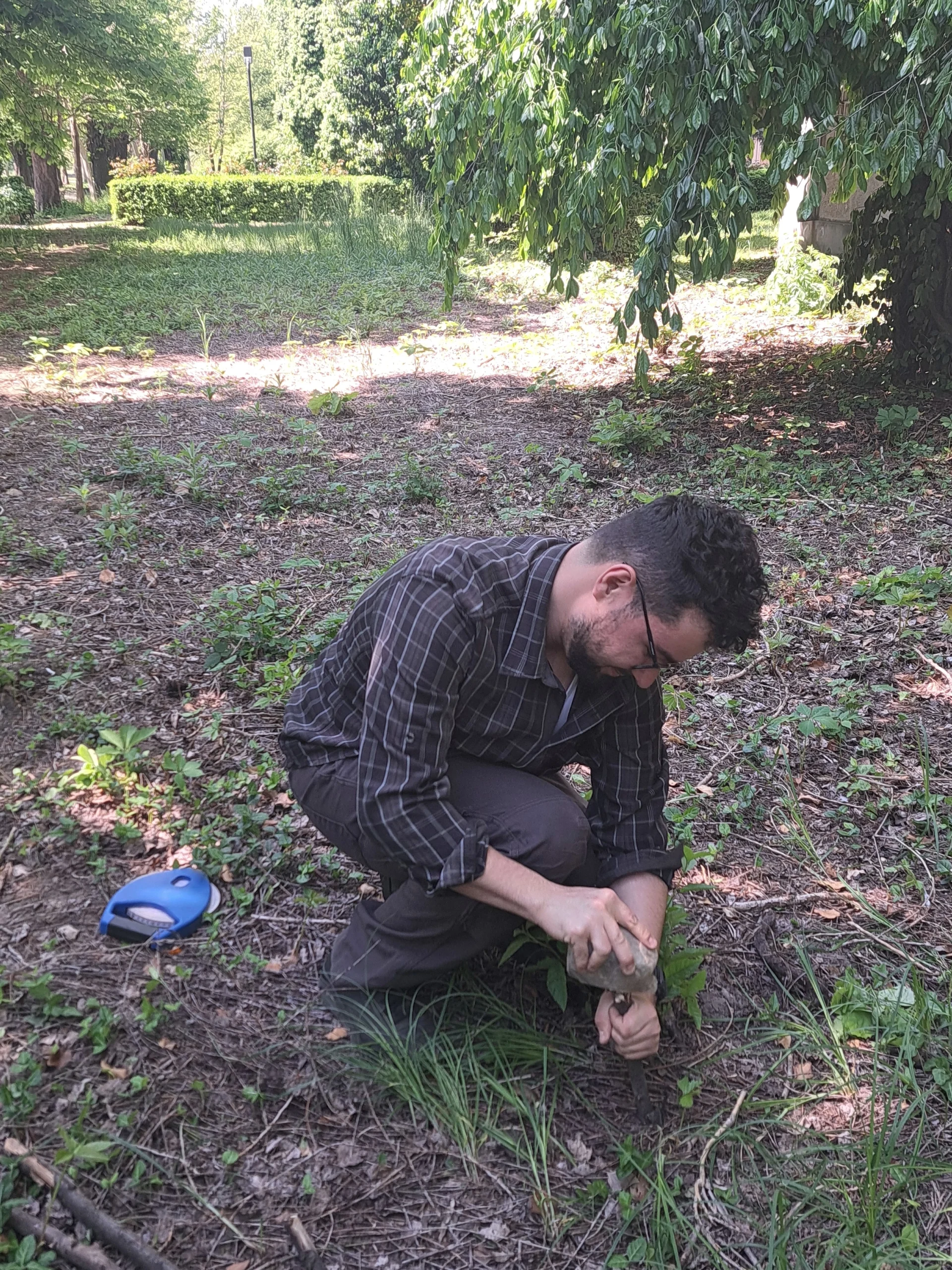
This initiative constitutes a first step toward the future “Prehistoric Garden” project within the Botanical Garden—an experimental and educational space. Its aim is to continue exploring archaeological and anthropological research questions related to gardening and early agriculture, offering a living laboratory for understanding interactions between human communities and the plant environment in the past.
Postări asemănătoare:
 CIVIS Mobility Opportunities within a new series of Blended Intensive Programmes (BIPs) dedicated to Students in environmental sciences, urbanism, geography and agriculture
 CIVIS Mobility Opportunities within a new series of Blended Intensive Programmes (BIPs) dedicated to Students in environmental sciences, urbanism, geography and agriculture
 On Wednesday, 5 November 2025, ICUB invites you to two hybrid events regarding various solutions for the development of a sustainable agriculture
 The Project “The Dynamics of the Prehistoric Communities Located in the Mostiștea and Danube Valleys”, launched by the ArchaeoSciences Division of ICUB
