





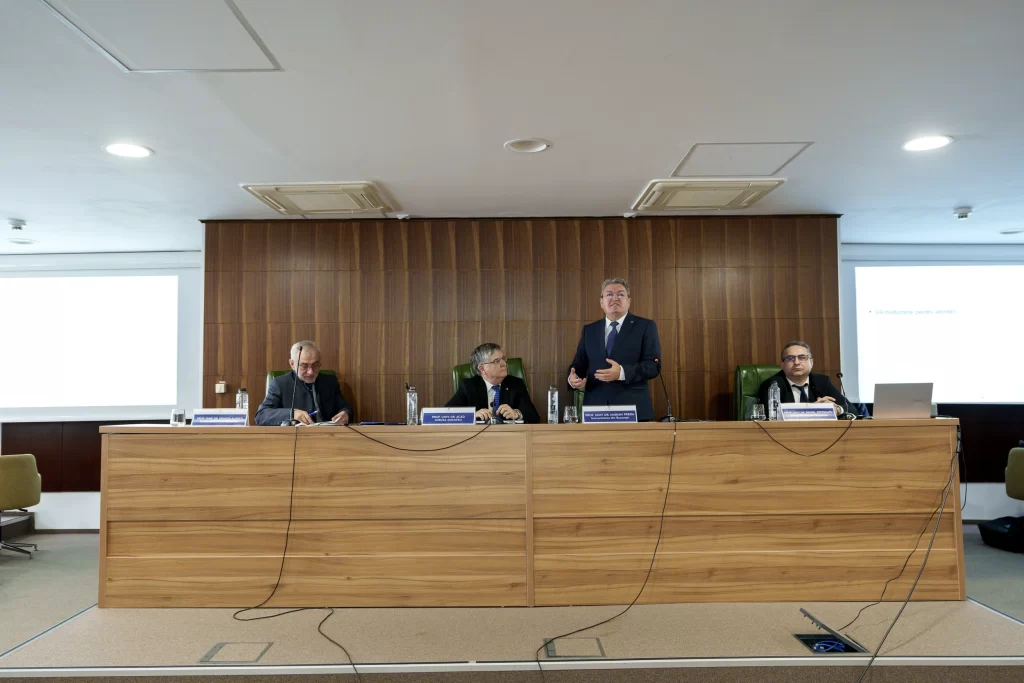
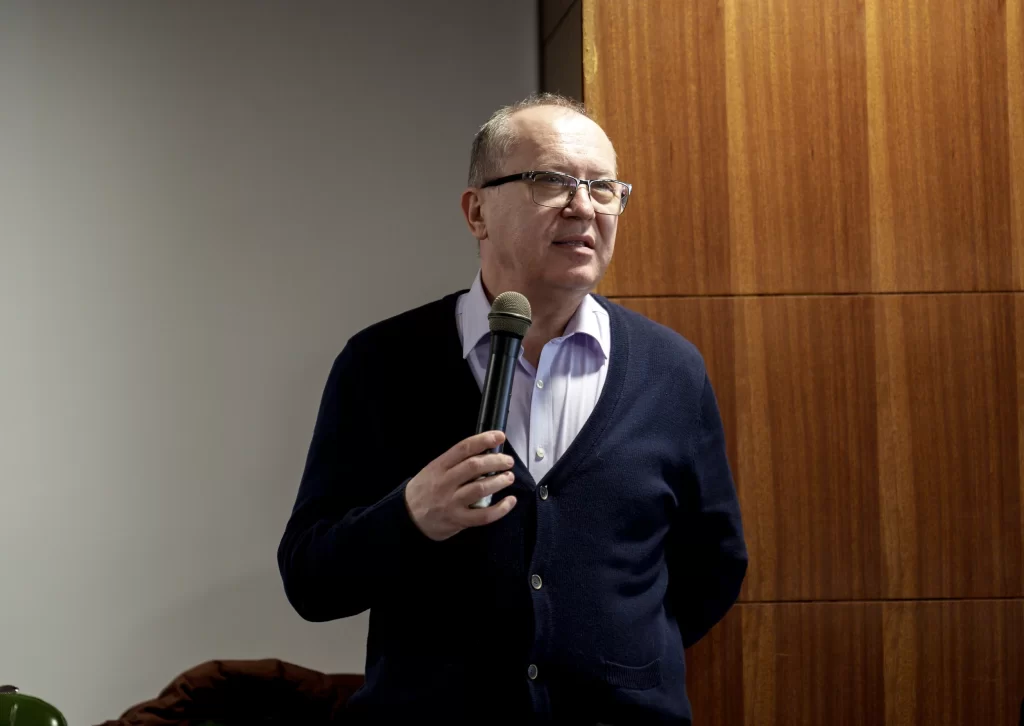
On Tuesday, March 12, 2025, The Faculty of Interdisciplinary Studies at the University of Bucharest hosted, the lecture entitled “Reconfiguring Knowledge: Humanism, Interdisciplinarity, and the New Intellectual Infrastructure of the 21st Century”, delivered by Professor Mircea Dumitru, PhD, Vice-President of the Romanian Academy and faculty member of the University of Bucharest’s Faculty of Philosophy.
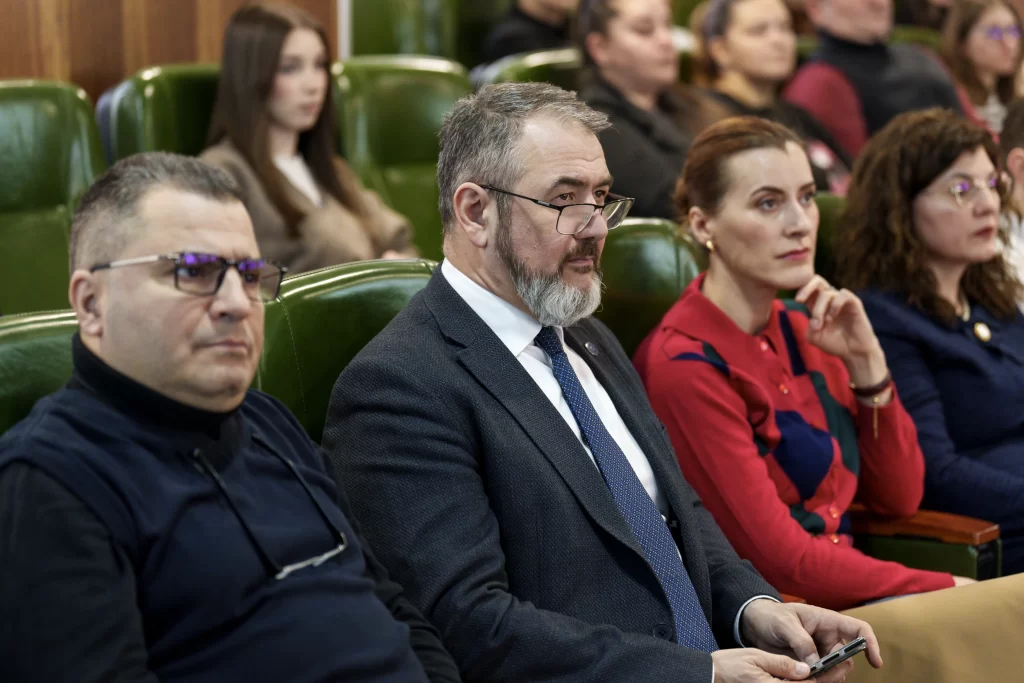
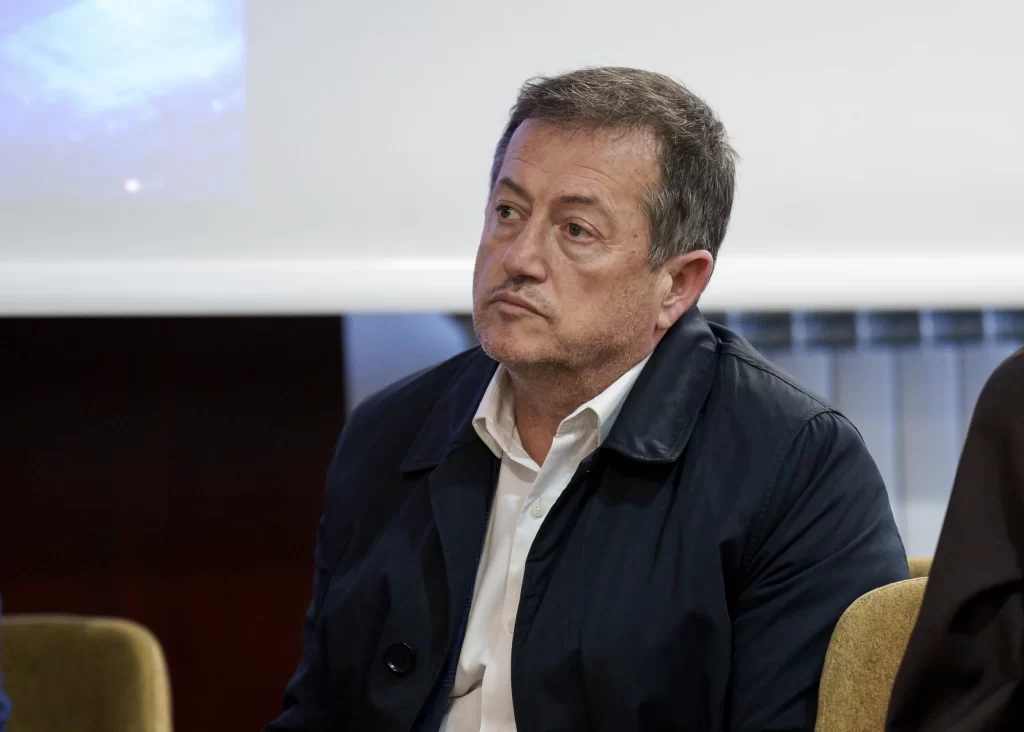
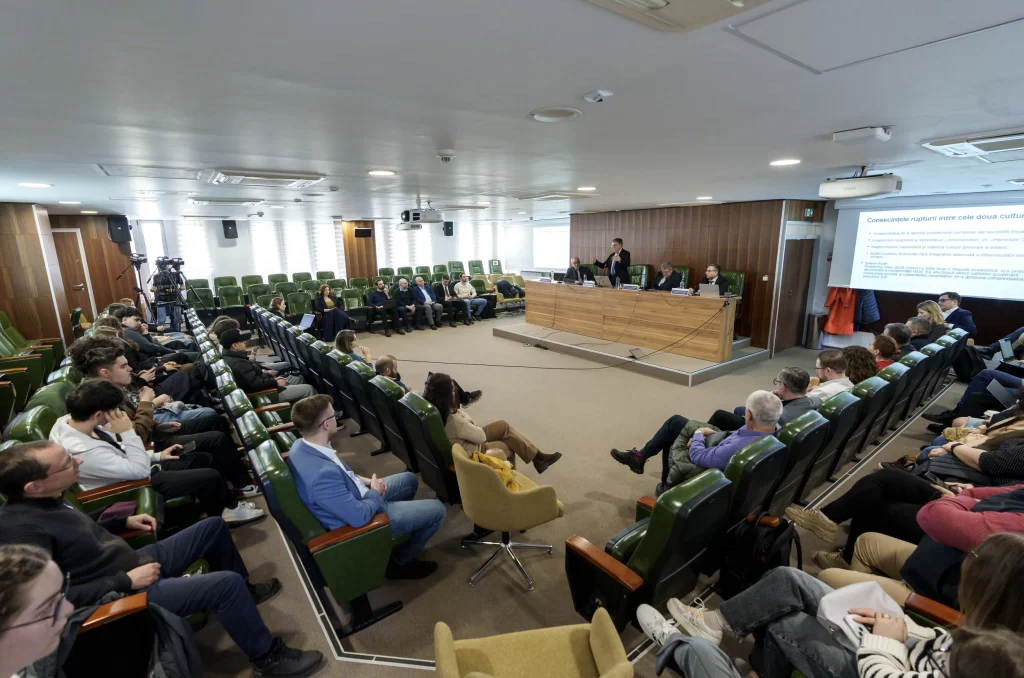
The event, held in the University of Bucharest Senate Hall (90 Panduri Road), brought together academics, researchers, and students interested in the contemporary transformations of knowledge and the role of interdisciplinarity in academia.
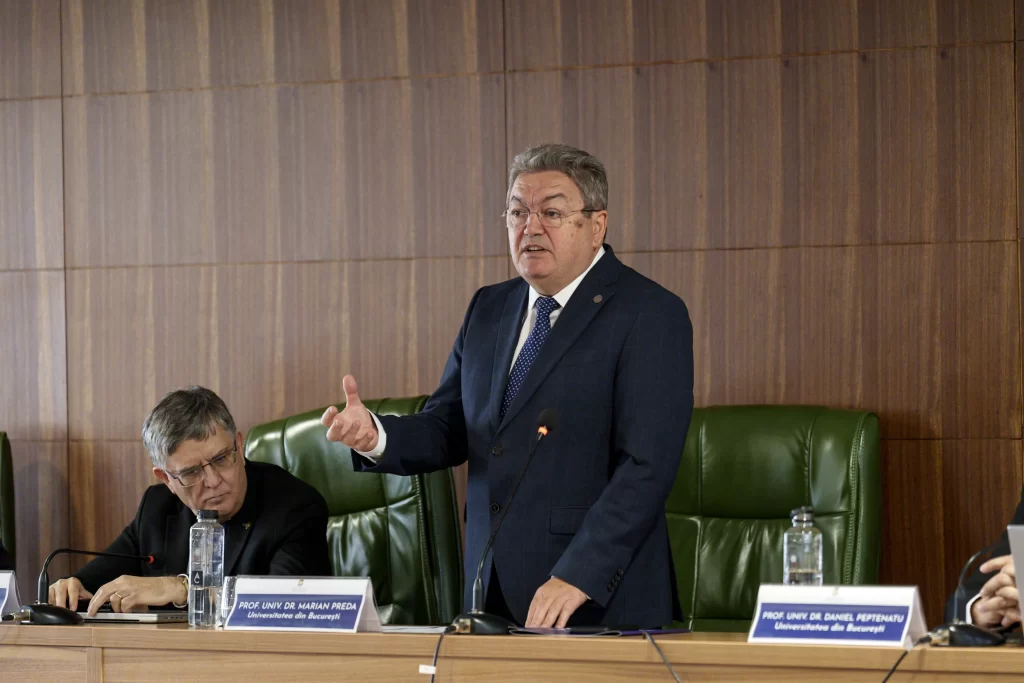
Among the participants were Professor Marian Preda, PhD, Rector of the University of Bucharest, Professor Daniel Peptenatu, PhD, Dean of the Faculty of Interdisciplinary Studies, and Professor Dragoș Paul Aligică, PhD, faculty member of the same institution.
Also in attendance were Professor Carmen Chifiriuc, PhD, Vice-Rector for Research, Professor Lucian Ciolan, PhD, Vice-Rector for Development Projects, Lifelong Learning, and Educational Infrastructure, Professor Răzvan Mihail Papuc, PhD, Vice-Rector for Infrastructure, Administration, and Heritage, Associate Professor Sorin Costreie, PhD, President of UNIICA – Network of Universities from the Capitals of Europe, CIVIS Alliance coordinator at the University of Bucharest, and faculty member of the Faculty of Philosophy, and Associate Professor Marius Jula, PhD, Dean of the Faculty of Business and Administration.
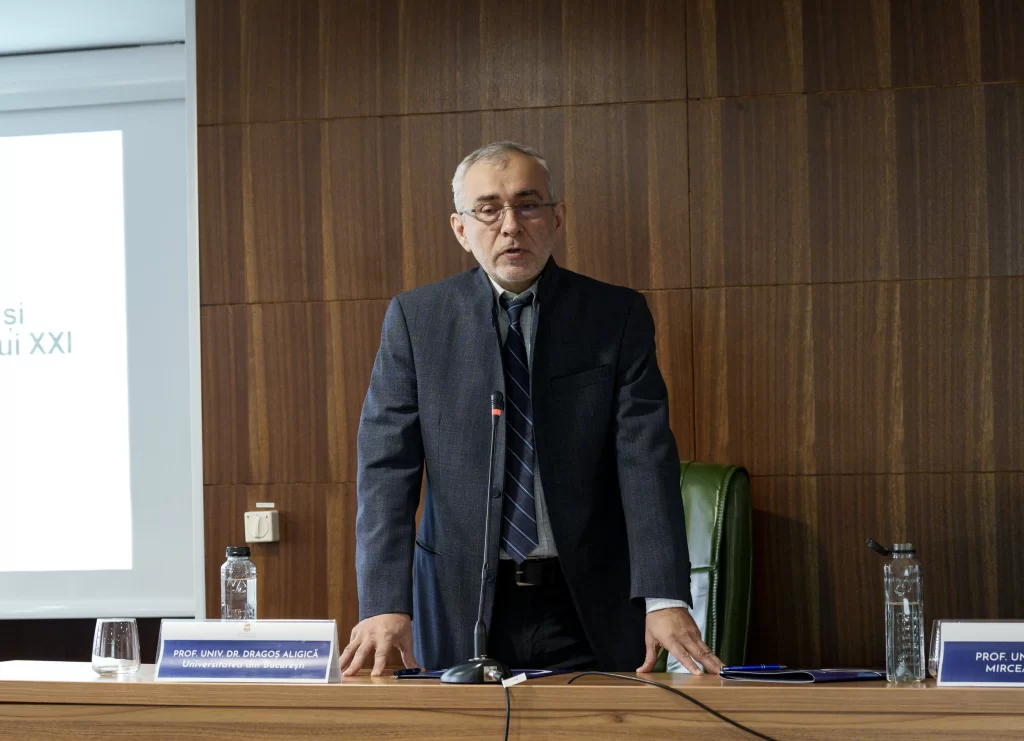
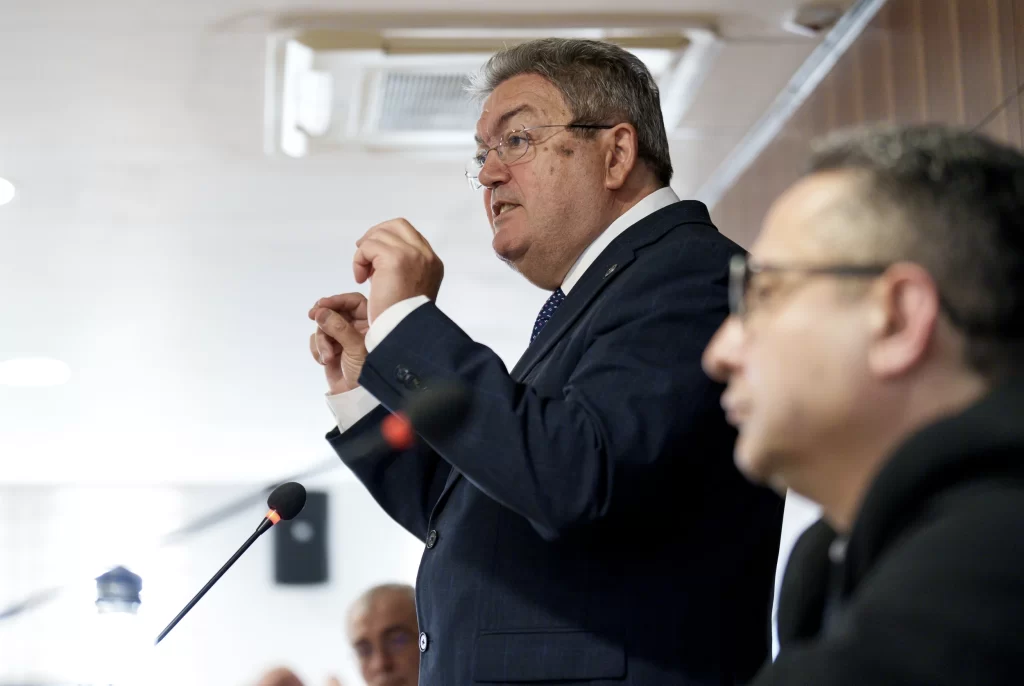
The discussion was moderated by Professor Dragoș Paul Aligică, PhD, who opened the event by emphasizing the importance of interdisciplinarity and the ways in which academic institutions engage with this concept. He noted that interdisciplinarity is not a new phenomenon, but rather a fundamental dimension of scientific development, present since its earliest stages and often driven by practical applications and the complex challenges of contemporary society.
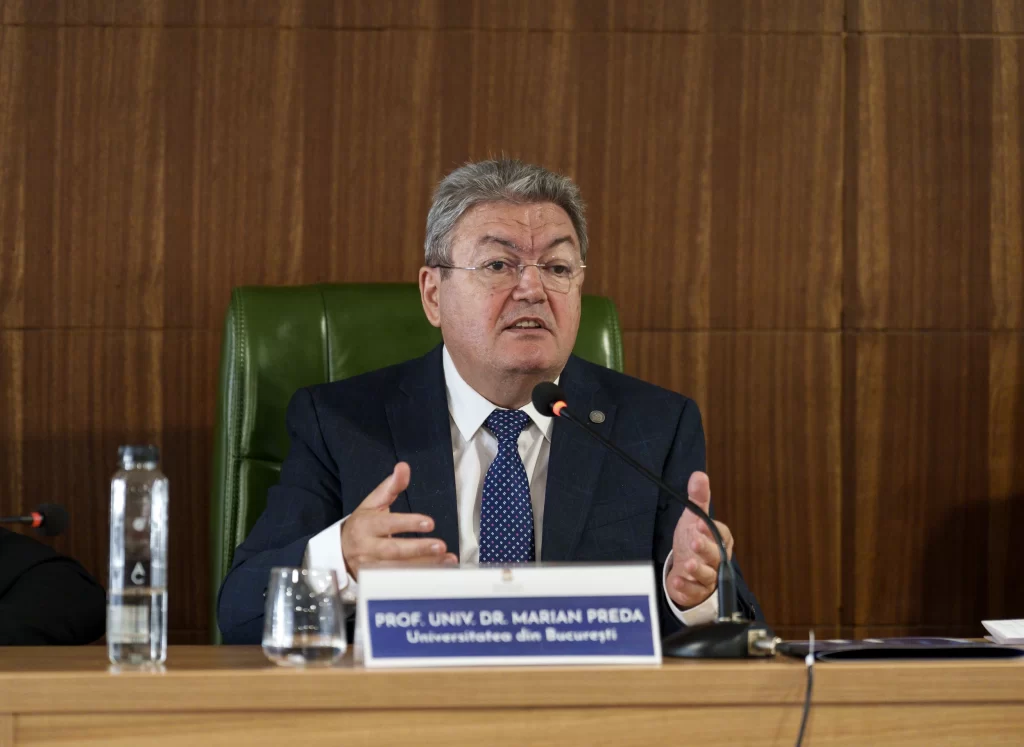
In his remarks, Professor Marian Preda, PhD, Rector of the University of Bucharest, highlighted that “interdisciplinarity is necessary because, in reality, we are speaking about the same world, viewed through different disciplinary lenses. The rational sciences provide structure and rigor, while the humanities bring meaning and reflection – and only together can they offer a complete understanding of reality and create the framework for the kind of knowledge contemporary society needs.”
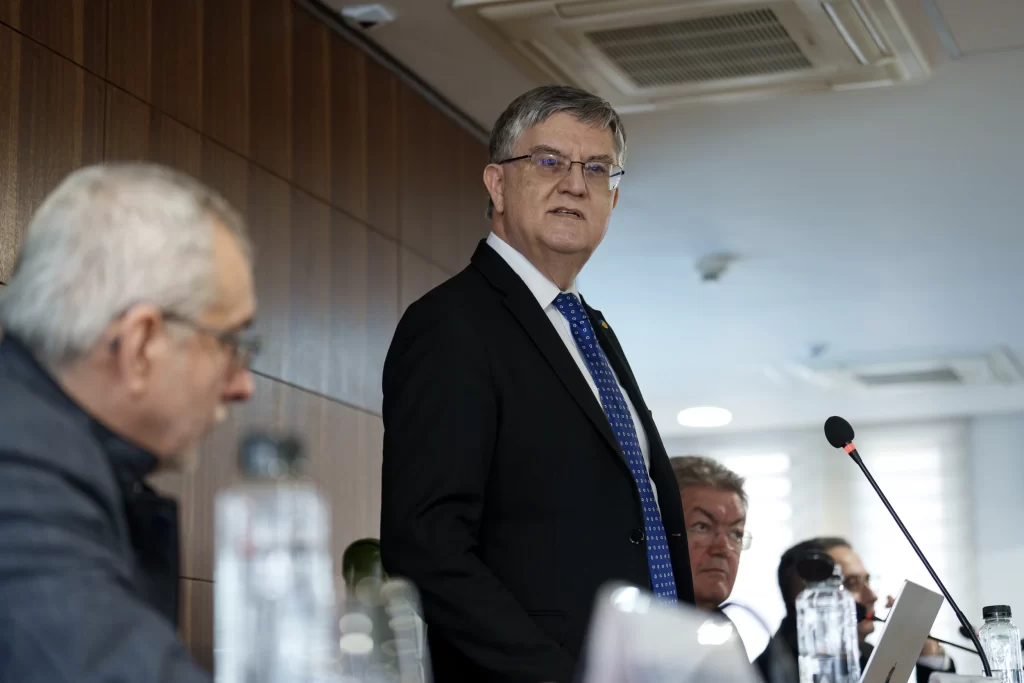
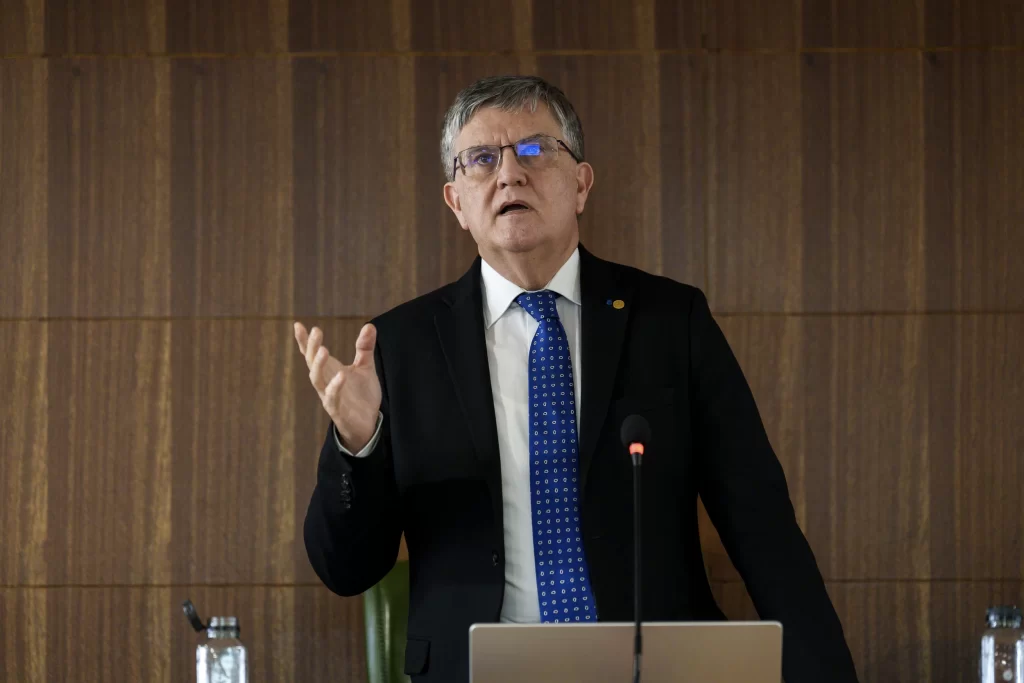
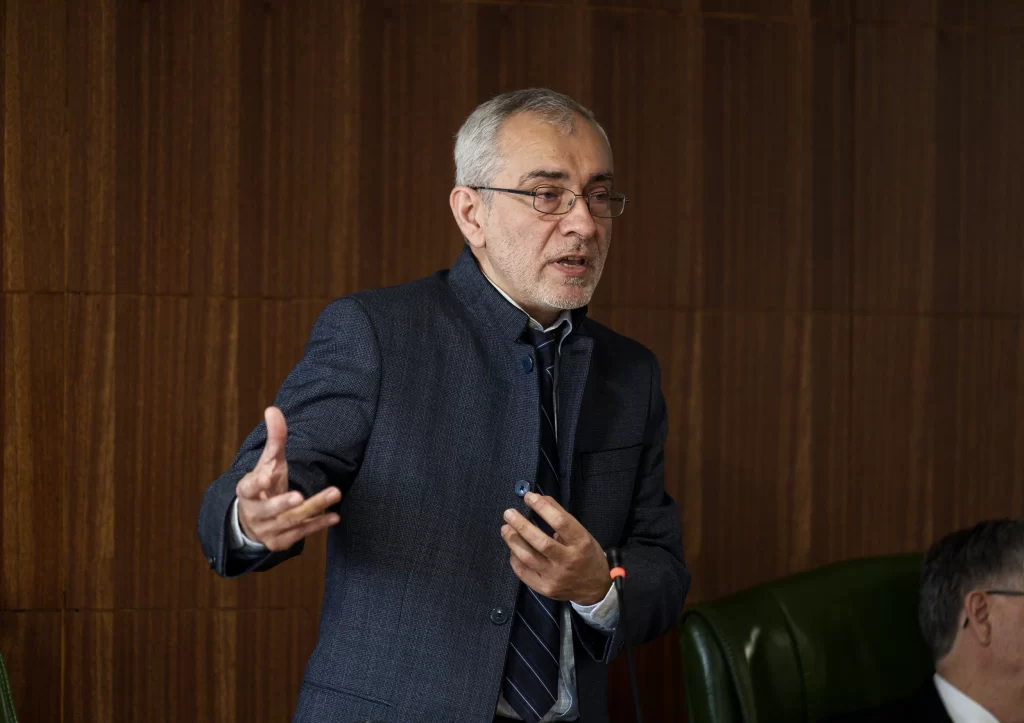
In his lecture, Professor Mircea Dumitru, PhD, addressed the transformations affecting knowledge in today’s context, shaped by rapid technological developments and an increasing need for collaboration across disciplines. The fragmentation of knowledge between the natural sciences and the humanities limits our ability to understand complex societal problems and places pressure on the legitimacy of expertise. This divide between the two cultures creates separate cognitive worlds, restricts comprehensive understanding, and fosters mutual suspicion, stereotypes, and vulnerability to misinformation.
Professor Mircea Dumitru, PhD, emphasized that “overcoming these fractures is not an option, but a necessity imposed by reality. Only through the integration of disciplines can we truly address the challenges of the 21st century.”
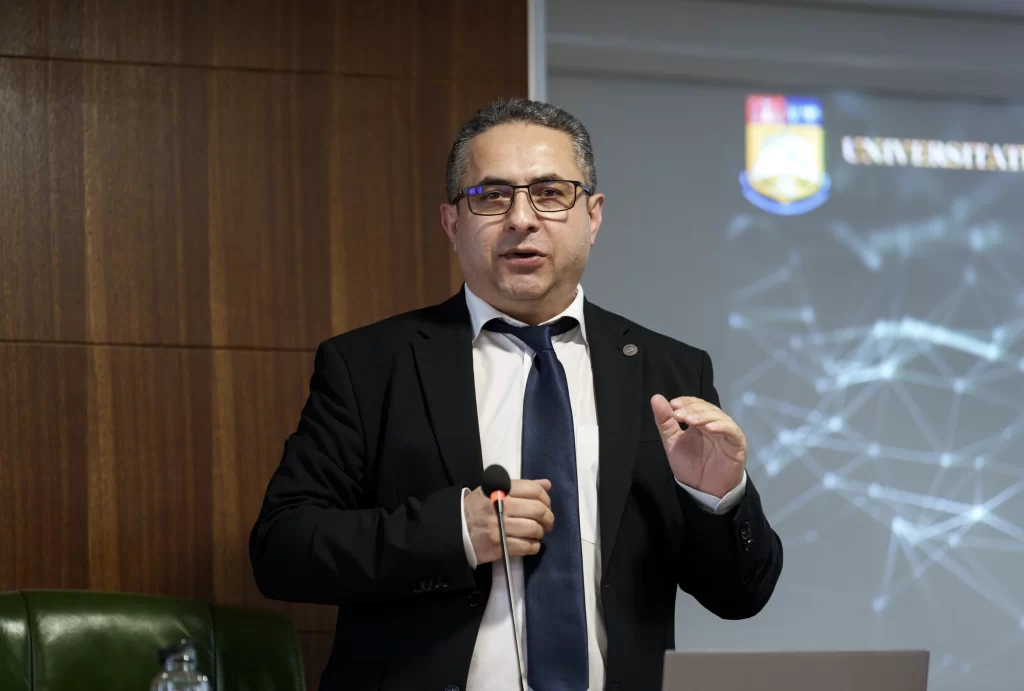
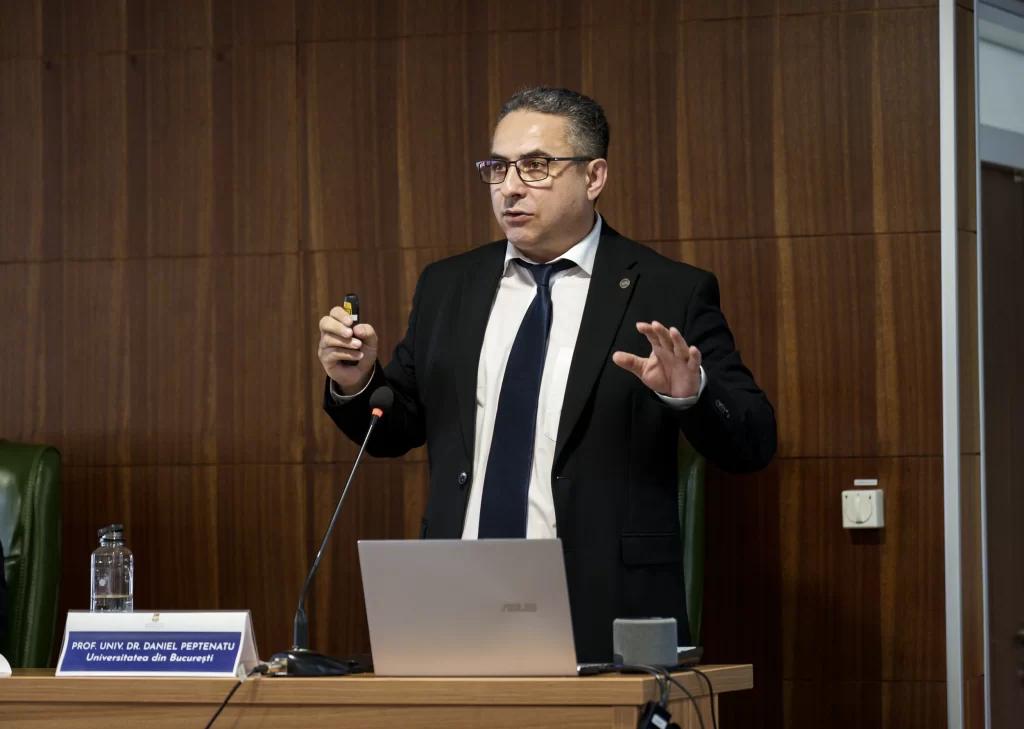
Building on the theoretical discussion of interdisciplinarity, Professor Daniel Peptenatu, PhD, Dean of the Faculty of Interdisciplinary Studies, presented concrete examples of how interdisciplinarity functions in practice. He stressed that many of today’s societal challenges can no longer be addressed from the perspective of a single discipline.
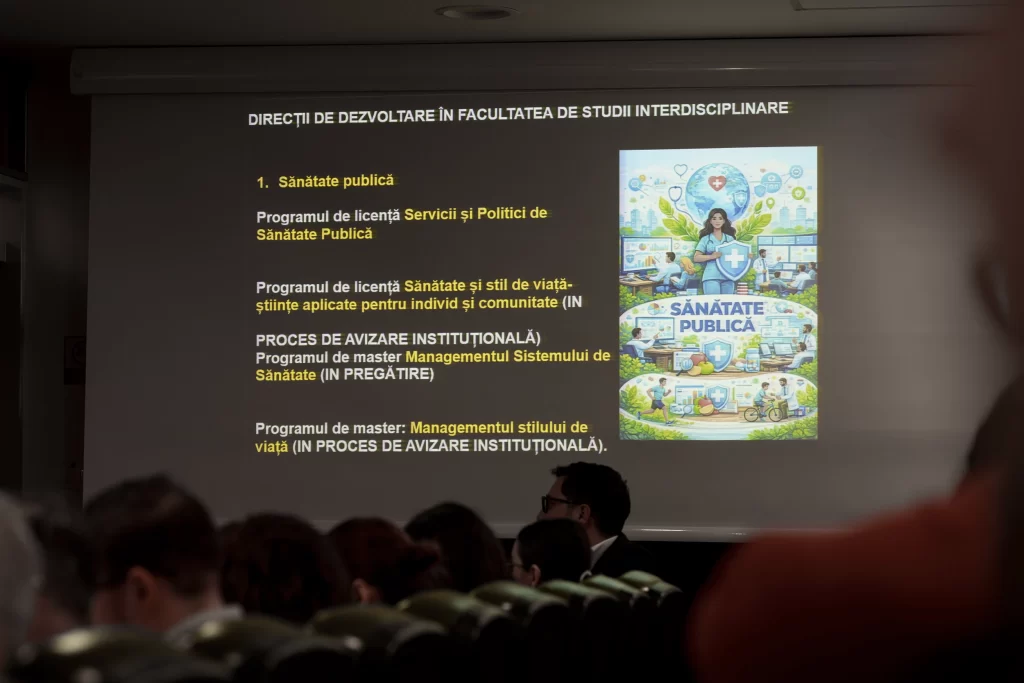
In this context, the Faculty of Interdisciplinary Studies develops academic programs grounded in cross-disciplinary collaboration, such as the undergraduate program “Public Health Services and Policies”, which integrates perspectives from sociology, medicine, data analysis, computer science, and management, as well as new programs currently under development, tailored to the evolving needs of society and the labor market.
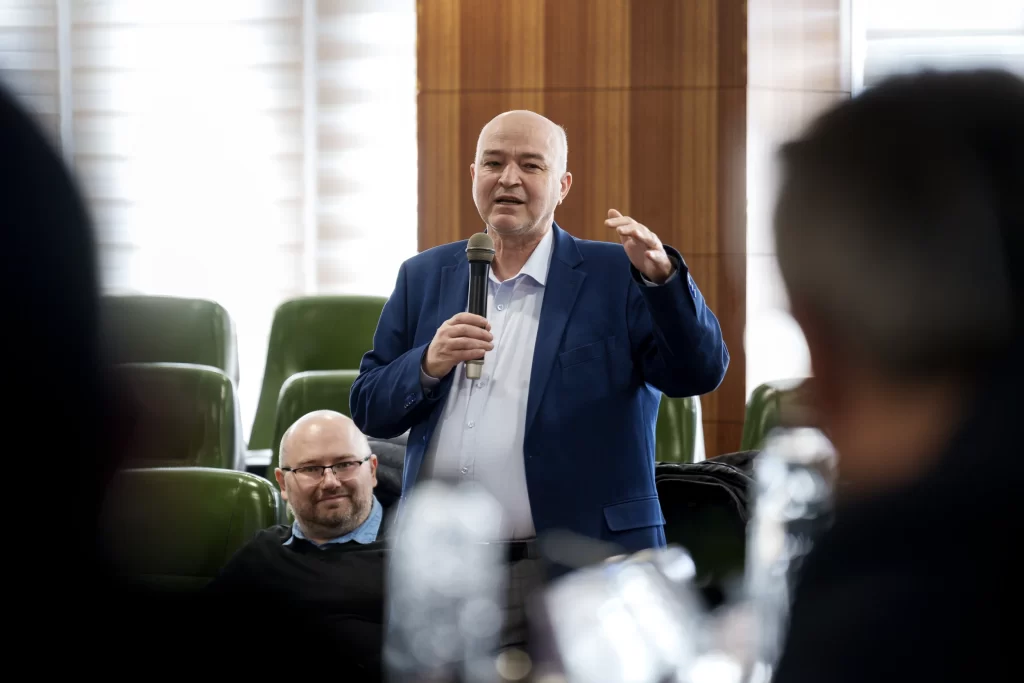
The event concluded with a Q&A session, conducted in an open and engaging atmosphere. Questions addressed the practical application of interdisciplinarity, the relationship between science and society, and ways to strengthen trust in expertise.
Debate on Contemporary Crises and Democratic Resilience
Following the lecture, the Faculty of Interdisciplinary Studies also organized a debate entitled “Crises of the Contemporary World: The Authoritarian Temptation and the Test of Democratic Resilience”, marking the launch of the volume “Crises and the Authoritarian Temptation”, authored by Daniel Dăianu, member of the Romanian Academy.
The event took place in the Senate Hall of the University of Bucharest Rectorate and featured contributions from Academician Daniel Dăianu, Professor Mircea Dumitru, PhD, Vice-President of the Romanian Academy, Professor Marian Preda, PhD, Rector of the University of Bucharest, and Professor Dragoș Paul Aligică, PhD.
In a global context marked by instability and profound transformations, the debate aimed to provide a framework for discussions on the future trajectories of democratic societies.
The Faculty of Interdisciplinary Studies (FIS) is the first faculty of its kind in Romania, established within the University of Bucharest, one of the country’s oldest and most prestigious higher education institutions.












Postări asemănătoare:
 ICUB invites you to the lecture “The Evolution of Human Diversity”, delivered by Dr. Mircea Iliescu, from the University of Cambridge
 The University of Bucharest launches the “Science on the open stage” lecture series. The first guest, Professor Carmen Chifiriuc, PhD, invites the public on a journey into the universe of the microbiome
 ICUB invites you to the lecture “Off the beaten track: The Significance of the Black Sea Regions for European Neolithization”, delivered by Dr. Marta Andriiovych from the University of Oxford and the University of Bern
 University of Bucharest undergraduate and master’s students invited to attend Romania’s first modular course dedicated to hybrid warfare, delivered by Professor Corneliu Bjola (University of Oxford)
