



Interdisciplinary Research, Education and Societal Impact Platform of the University of Bucharest
Created and administered by the University of Bucharest since 2005, the Hațeg Country UNESCO Global Geopark is part of the UNESCO International Programme for Geosciences and Geoparks and member of the European and Global Geoparks Network. UNESCO geoparks are territories with internationally significant geological heritage that are managed through an integrated approach combining conservation, education and sustainable development.
Unlike protected areas focused solely on conservation, a UNESCO Global Geopark is a living territory where scientific research, community development and education work together. In this context, the Hațeg Country UNESCO Global Geopark functions as a structured interdisciplinary platform of the University of Bucharest, integrating research excellence with real-world territorial impact across 1200 km2 in Hunedoara County.
Interdisciplinary Research in a UNESCO Territory
A UNESCO Global Geopark is built around geological heritage of international value. In Hațeg, this includes world-renowned Late Cretaceous fossil sites, particularly dwarf dinosaur discoveries that reshaped scientific understanding of island evolution in Europe.
Geoparks do not only protect fossils, they promote research, interpretation and scientific dissemination. In Hațeg, this translates into an active research environment involving:
- Paleontology and stratigraphy
- Paleoecology and paleobotany
- Biodiversity and habitat monitoring
- Environmental sciences and climate adaptation
- Geography and spatial planning
- Anthropology and intangible heritage
- Education sciences and science communication
Over recent years:
- 15 research projects were carried out with Geopark support
- 10 peer-reviewed publications were produced using data from the territory
- Around 30 researchers annually, national and international, conduct studies in the Geopark
Scientific contributions include articles in Cretaceous Research, Geoheritage, Papers in Palaeontology, Geoconservation Research and interdisciplinary volumes on geotourism, volunteer management and heritage interpretation
As required by UNESCO, research outcomes are not isolated academic exercises; they are translated into interpretation infrastructure, exhibitions, thematic trails and community-based projects.
A Structured Research and Interpretation Infrastructure
A UNESCO Global Geopark must demonstrate active management, education programs and heritage interpretation infrastructure. Through these structures, the University ensures that UNESCO standards for conservation, interpretation and community engagement are fulfilled. The Hațeg Geopark includes:
- 6 visitor and interpretation centres (“Houses of the Geopark”)
- 9 thematic trails (94 km)
- 25 geological and 8 natural sites under monitoring
- 8 automated Eco-Counter visitor monitoring devices
These facilities are not only tourist attractions, they function as research and education infrastructure supporting fieldwork, long-term monitoring and applied sustainability studies.
For example:
- The House of the Geopark (Hațeg) serves as a research and education hub
- The House of Volcanoes (Densuș) interprets volcanic heritage through scientific exhibitions
- Thematic trails such as the recent “Colț Fortress” integrate geological research into public education
Education in a UNESCO Global Geopark
One of the three pillars of the UNESCO Global Geoparks program is education. A geopark must actively promote Earth sciences, environmental awareness and sustainable development education. In Hațeg, this mission is implemented through:
- 150 University students annually engaged in field practice
- 1,500 hours of practical training for high school pupils per year
- Around 1,000 students and pupils participating annually
- 98 structured courses
- 216 workshops and educational sessions
- 52 formal educational partnerships, forming the EduGeopark local educational network
Programs include experiential learning modules, internships, volunteer training (“Volunteers for the Geopark Programme”), and interdisciplinary field schools.
International Cooperation within the UNESCO Network
UNESCO Global Geoparks form a structured international network encouraging scientific exchange and collaboration. The Hațeg Geopark contributes to the University’s international profile through:
- 17 international partnerships
- 10 international researchers involved annually
- 50 participations in international conferences in the last 5 years
- 5 international meetings hosted locally
- 13 international volunteers and interns from Portugal, Spain and Germany
Major international projects include:
- Danube Interreg GeoTour Plus
- Erasmus+ Exchanging Memories – Memory of the Earth
- Reconnect I–III (Horizon framework)
- UNESCO grant ”Sustainability at Work!”
Community Engagement and Sustainable Development
A UNESCO Global Geopark must demonstrate sustainable local development and community participation. In Hațeg, this includes:
- 405 local volunteers involved in the volunteer programme since 2013
- 5 citizen-science programs
- Approx. 80 local businesses supported
- Around 20,000 visitors annually, only at the geopark’s facilities
- About 12 geotourism events per year
Projects range from water-quality citizen science initiatives (Sustainability at Work) to sustainable agriculture (DinoGarden), geocaching trails, and the annual Dinosaur Festival.
In 2020, the Geopark received the Romanian National Award for Sustainable Development (Equity Category).
Sustainability and the SDGs
UNESCO Global Geoparks are explicitly aligned with the UN Sustainable Development Goals.
Since 2015:
- 30 projects directly contributed to SDGs
- 18 initiatives targeted Quality Education
- 9 supported Decent Work and Economic Growth
- 7 addressed Life on Land
- 5 addressed Climate Action
The Geopark builds partnerships between universities, research institutes, NGOs and local authorities — contributing strongly to SDG 17 (Partnerships for the Goals)
A Model of Integrated University Engagement
As required by UNESCO, a geopark is not only a territory, but a governance model based on science, education, sustainability and partnerships.
The Hațeg Country UNESCO Global Geopark demonstrates how a research-intensive university can generate measurable scientific output, develop interdisciplinary research platforms, foster structured international cooperation, translate research results into tangible societal impact, and actively contribute to global sustainability agendas. Through this integrated and territorially embedded approach, the University of Bucharest strengthens its research environment, enhances its international outlook, and expands its societal impact within a globally recognized UNESCO framework.
Example of an Interdisciplinary Project
“Sustainability at Work! Research and Community-Driven Action for Sustainable Development”
The project “Sustainability at Work!” (2023–2024), supported by the abrdn Foundation through the UNESCO Office in Venice, illustrates how the Hațeg Country UNESCO Global Geopark functions as an interdisciplinary living laboratory of the University of Bucharest.
Implemented together with Babeș-Bolyai University, six local schools and two NGOs, the project applied citizen science methodologies to monitor water quality in wells and springs used by local communities. Over 90 students collected and analysed data, while 70 entered results into a digital platform. The project also included water footprint assessments and the development of sustainability strategies for partner NGOs.
Disciplines Integrated
The initiative combined:
- Environmental sciences & hydrology – water sampling and analysis
- Geography – spatial interpretation of water data
- Biology & ecology – ecosystem health assessment
- Sustainability studies – footprint evaluation and strategy development
- Education sciences – service-learning and citizen science methodology
- Digital tools & data management – data visualisation and platform use
The Role of the UNESCO Global Geopark
A UNESCO Global Geopark connects geological heritage, environmental management and education within a real territory. In this case, the Geopark provided:
- A stable territorial research framework
- Access to real community water sources
- A network of schools and local partners
- Institutional alignment with UNESCO sustainability principles
Added Value for the University of Bucharest
Through this project, the University generated applied research data while fostering interdisciplinary collaboration across multiple academic fields, strengthened experiential learning and doctoral research opportunities through real-world field engagement, contributed directly to several Sustainable Development Goals (SDGs 4, 6, 13 and 17), and enhanced its societal impact within an internationally recognised UNESCO framework. This example clearly demonstrates how the Geopark enables the University of Bucharest to transform academic research into measurable community-based impact while reinforcing interdisciplinary excellence.
CONTACT
Address: 9A Libertăţii Street, Haţeg, Hunedoara County
Telephone: +40 774 050 465
E-mail: hateggeoparc@unibuc.ro
Website: hateggeoparc.ro
Facebook: The Hateg UNESCO Global Geopark
Photo Gallery
NEWS
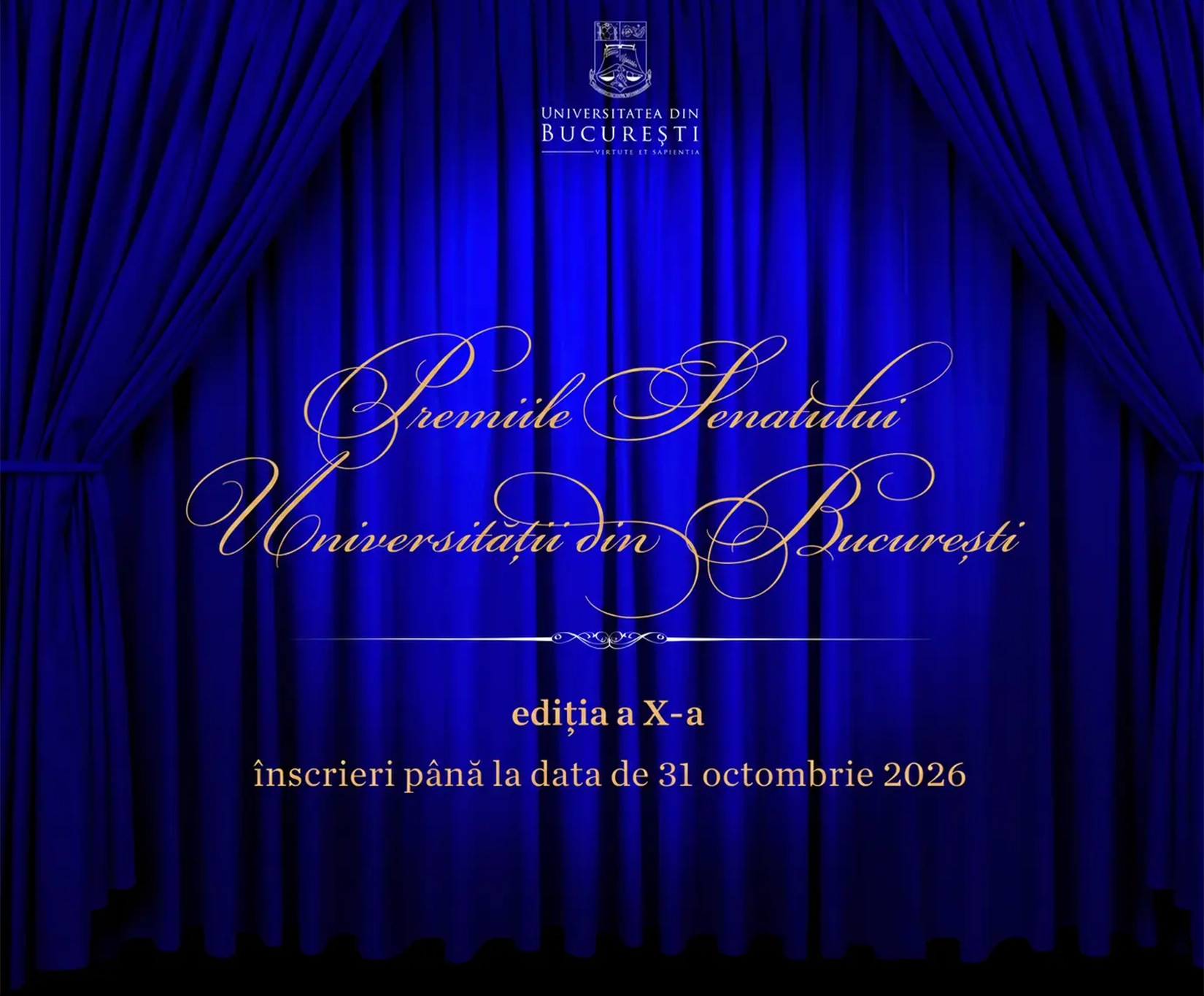
University of Bucharest opens applications for the 10th edition of the Senate Awards. Awards worth more than RON 500,000 for the most deserving members of the academic community
Events, Calls, Sustainability, Announcements, UB NewsPostări asemănătoare: Prizes totaling more than 500.000 lei for the most deserving members of the academic community. The University of Bucharest has opened applications for the 8th edition of the UB Senate Awards Prizes totaling more...

Applications open for a new series of CIVIS BIPs! UB students invited to apply for a blended intensive programme by the end of October
International, UB Student, Calls, CIVIS – The European Civic University, UB NewsPostări asemănătoare: Blended Intensive Programmes (BIPs) CIVIS on medicine and health. UB students interested in these fields are invited to apply by October 31, 2023 UB and other CIVIS students, invited to apply to the second series...
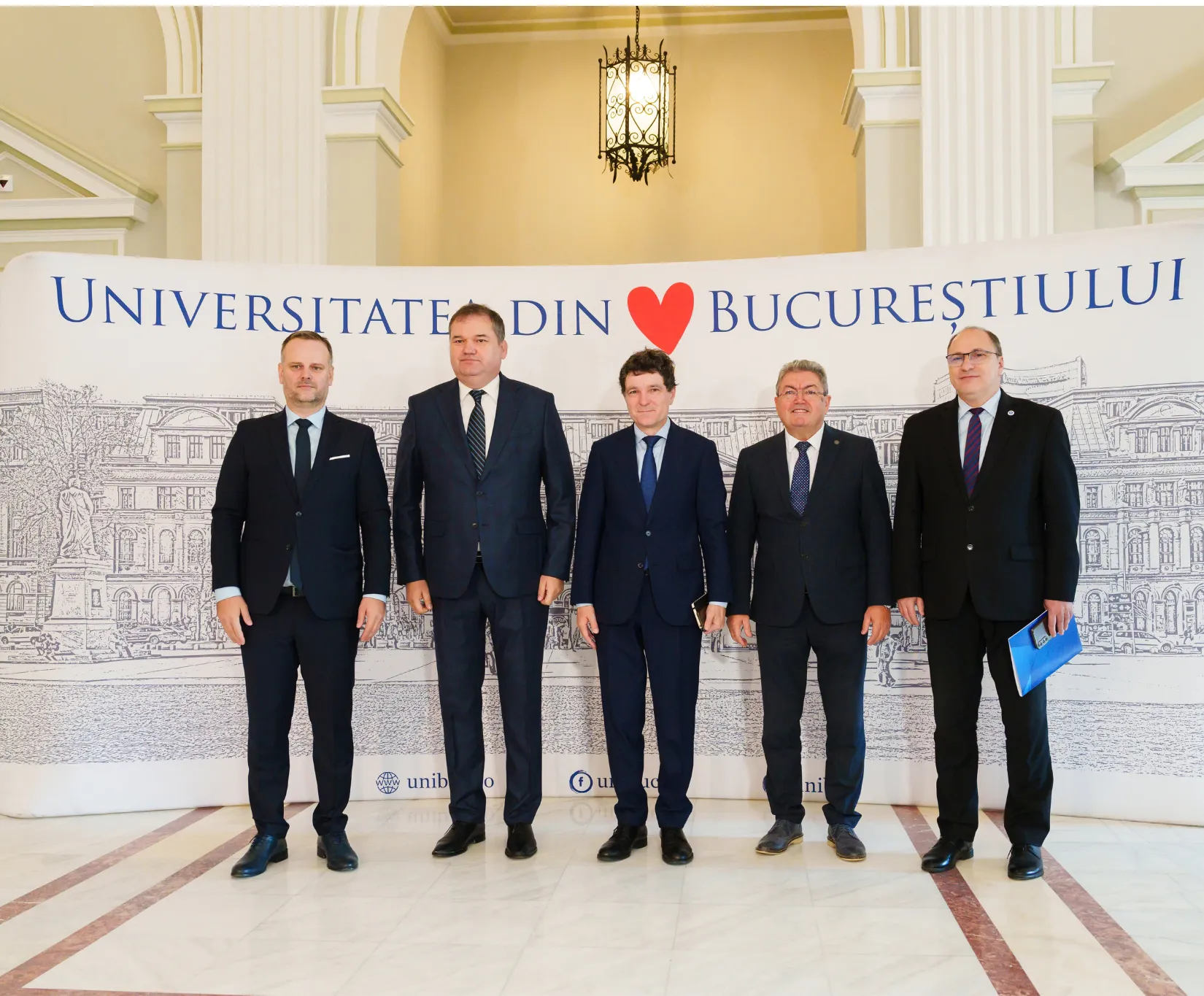
University of Bucharest inaugurates restored Faculty of History building and officially opens the 2026–2027 academic year
Events, UB Student, Announcements, UB NewsPostări asemănătoare: History Restored. The Eagle and Two Griffins to Be Reinstalled on the Pediment of the University of Bucharest Palace University of Bucharest Kicks Off the 2026–2027 Academic Year. The Dates of the Opening...

Times Higher Education WUR 2027: University of Bucharest, Romania’s leading comprehensive university and among the world’s top 1,000 higher education institutions
Press Releases, Research, International, UB Student, Sustainability, UB NewsPostări asemănătoare: Times Higher Education: University Of Bucharest, among the Most Reputable Universities in Romania in the Top World University Rankings 2023 by Subject Times Higher Education WUR 2025: the University of Bucharest...

International Co-authored Article by FJSC Researcher Receives Award from the U.S. National Communication Association (NCA)
Press Releases, Research, International, Awards and Distinctions, UB NewsPostări asemănătoare: Oana Șerban Authored a Routledge Volume. “Cultural Capital and Creative Communication. (Anti-)Modern and (Non-)Eurocentric Perspectives” has just been published About the adaptation of Shakespeare’s plays to...

International Award for a Doctoral Thesis from the University of Bucharest in Natural Language Processing
Research, International, UB Student, Awards and Distinctions, Announcements, UB NewsPostări asemănătoare: The University of Bucharest, on the Podium of the International Competition Imperial Barell Award (IBA) UB doctoral and post-doctoral students, invited to register for the CIVIS Training for innovation and...


