




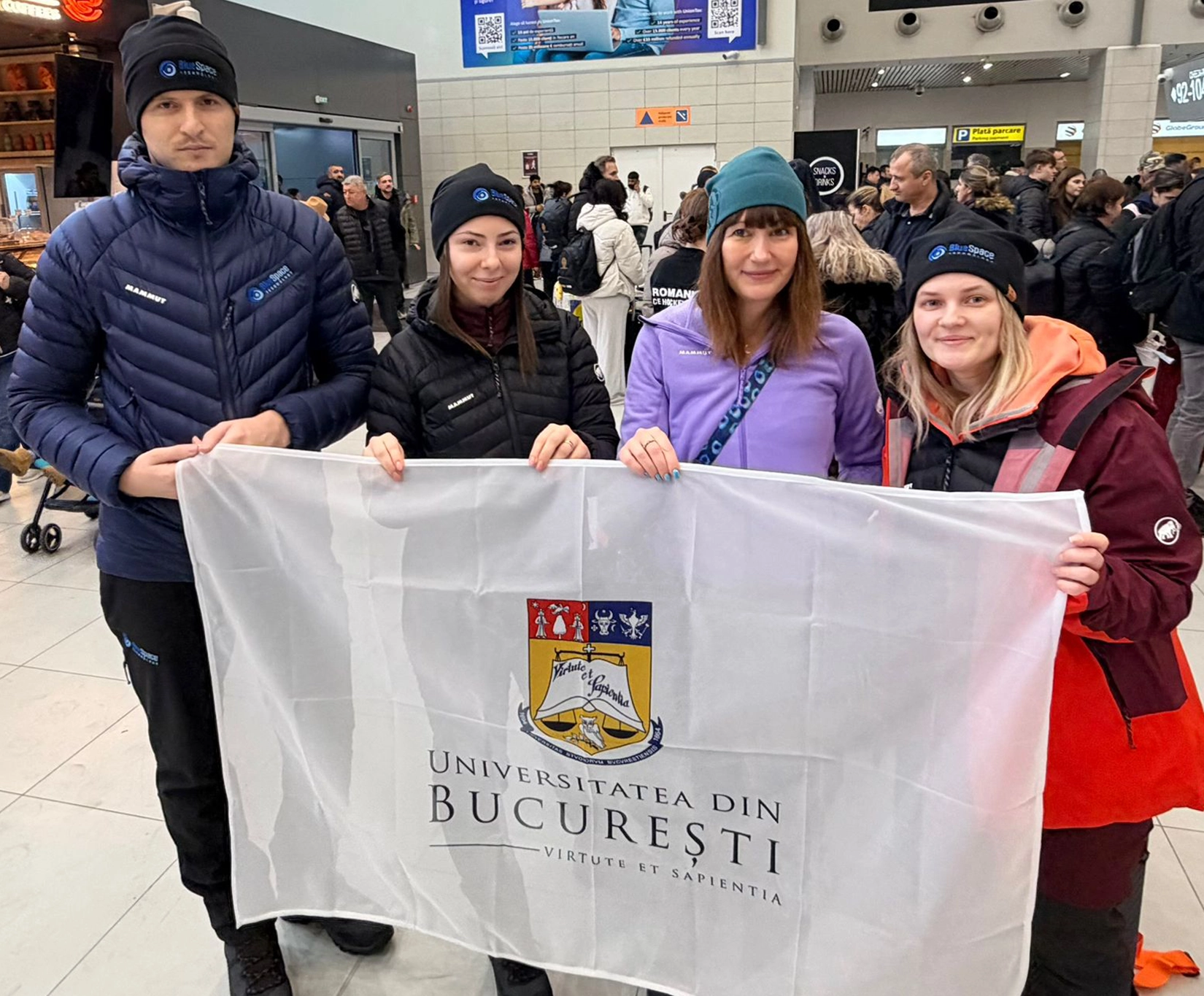
On Saturday, 24 January 2026, the day Romania celebrated the Union of the Romanian Principalities, the University of Bucharest, through its Faculty of Biology and the University of Bucharest Research Institute (ICUB), sent a contemporary message of unity and collaboration by launching a new scientific expedition to Antarctica, involving four researchers from the University of Bucharest and the National Institute for Research and Development for Biological Sciences (INCDSB).
As part of the ROICE expedition program, the initiative contributes to strengthening Romania’s presence in Antarctic research. The team will collect data relevant to multiple scientific fields, including biology, particularly microbiology and biotechnology, as well as medicine, human physiology, and geology.
The expedition is built on complementary expertise and a shared recognition of an urgent reality: large-scale changes affecting climate, biodiversity, and human health have direct and tangible consequences for Romania as well. Antarctica serves as a unique natural laboratory, where interdisciplinary research can generate data and insights with global relevance, while also offering practical benefits for society.
We invite you to learn more about the objectives of the expedition directly from the members of the team who prepared it – the four researchers who departed for Antarctica today: Iris Tușa, Ovidiu Vrâncianu, Roxana Cristian, and Georgiana Grigore.
Within the scientific program, the team is pursuing three major, interconnected research directions:
- The impact of climate change on biodiversity – examining how fragile ecosystems respond to rapid temperature shifts and habitat changes, acting as early indicators of broader climate transformations.
- Permafrost: from emerging infectious agents to active pharmaceutical biomolecules – investigating permafrost as a domain of dual importance, both in terms of potential biological risks and as a source of biomolecules with pharmacological potential.
- Human adaptation to thermal stress – analyzing physiological responses to extreme environmental conditions, with applications in environmental medicine, prevention strategies, and occupational health.
Through this approach, the expedition delivers a clear message: today’s major challenges cannot be fully understood from a single perspective. Only through collaboration across disciplines, methodologies, and research teams can we achieve robust, transferable, and truly meaningful results.
Beyond its symbolic significance, the initiative has a concrete goal. The data and observations collected in Antarctica may contribute to shaping strategic directions in climatology, biosecurity, public health, and the development of biomedical solutions inspired by life’s ability to adapt to extreme environments.
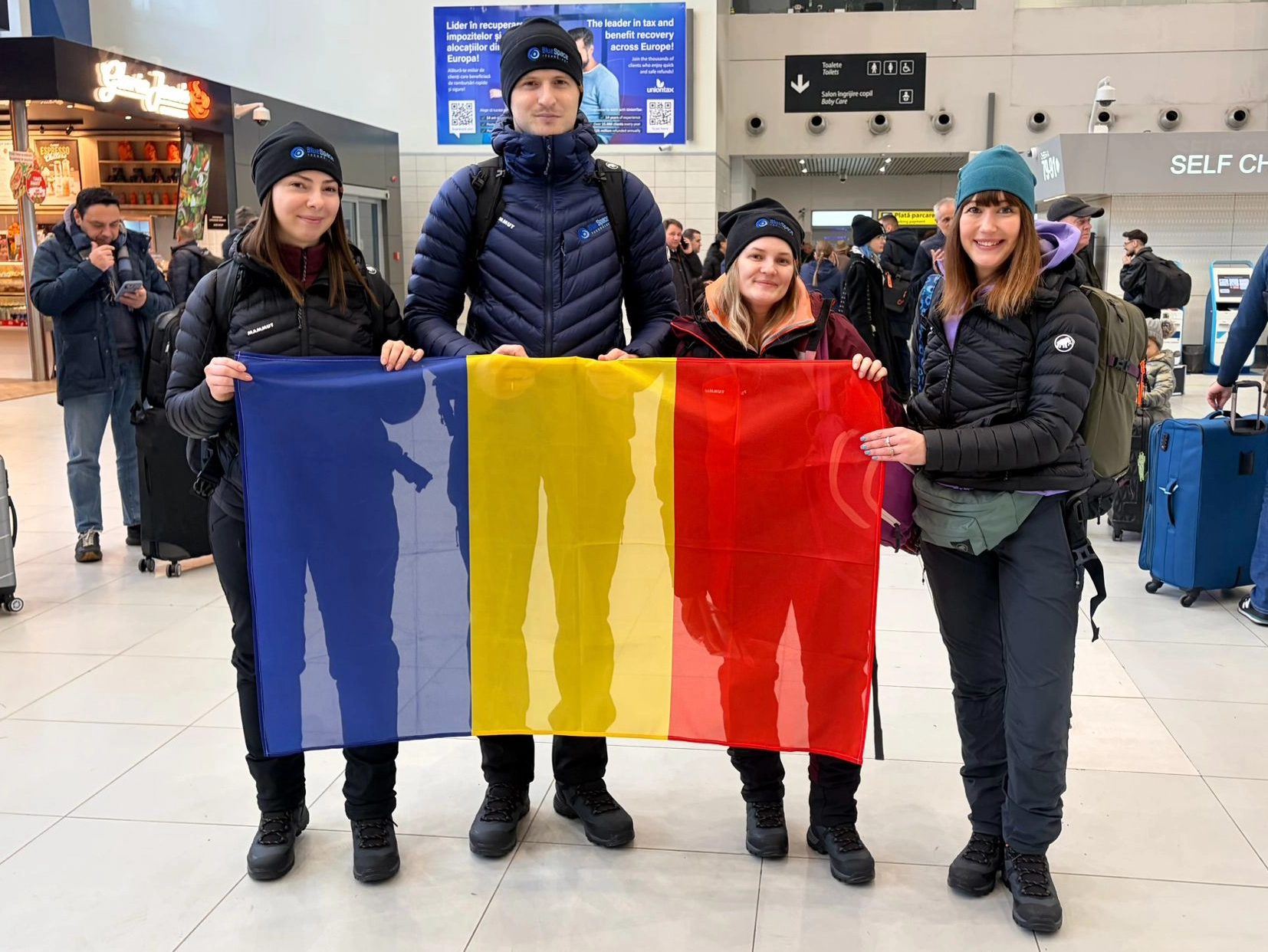
We wish the four researchers success and look forward to welcoming them home with valuable findings and compelling stories from their journey to “the land where you can hear the glaciers breaking” – stories that will help us better understand the world we live in.
Postări asemănătoare:
 The University of Bucharest Won the “Interdisciplinary Institutional Platform for Excellence in Research, Development and Professional Training in the Field of Archaeological Sciences” Project within the “Institutional Development Projects – RDI Excellence Funding Projects” Competition
 The University of Bucharest Won the “Interdisciplinary Institutional Platform for Excellence in Research, Development and Professional Training in the Field of Archaeological Sciences” Project within the “Institutional Development Projects – RDI Excellence Funding Projects” Competition
 The University of Bucharest participates in the „Fete și femei în cercetarea științifică” („Girls and women in scientific research”) event organized by CNR UNESCO, the French Embassy, and the French Institute in Romania
 University of Bucharest remains Romania’s top institution for Interdisciplinary Scientific Research, according to the second edition of the THE Interdisciplinary Science Rankings 2026
