




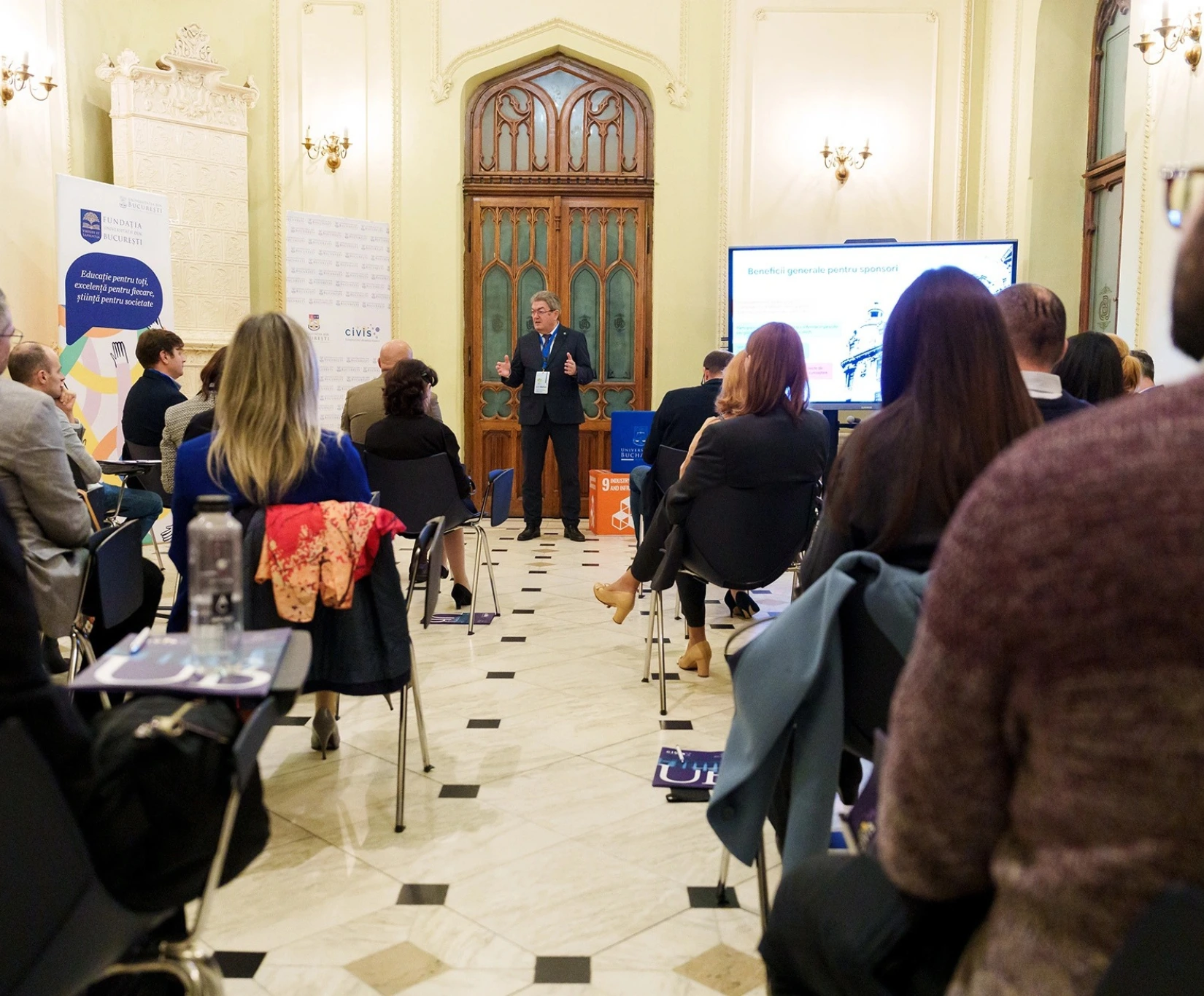
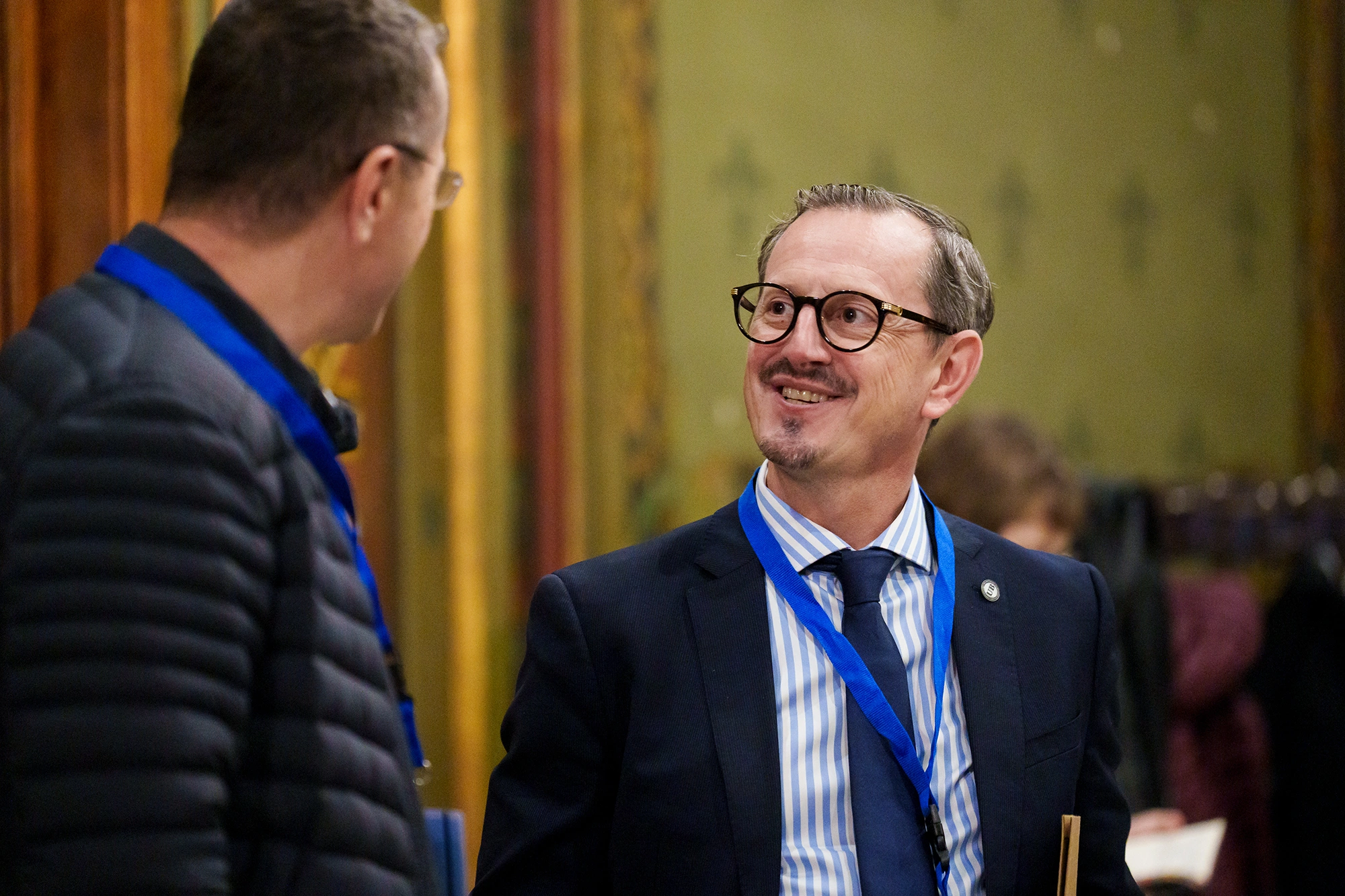
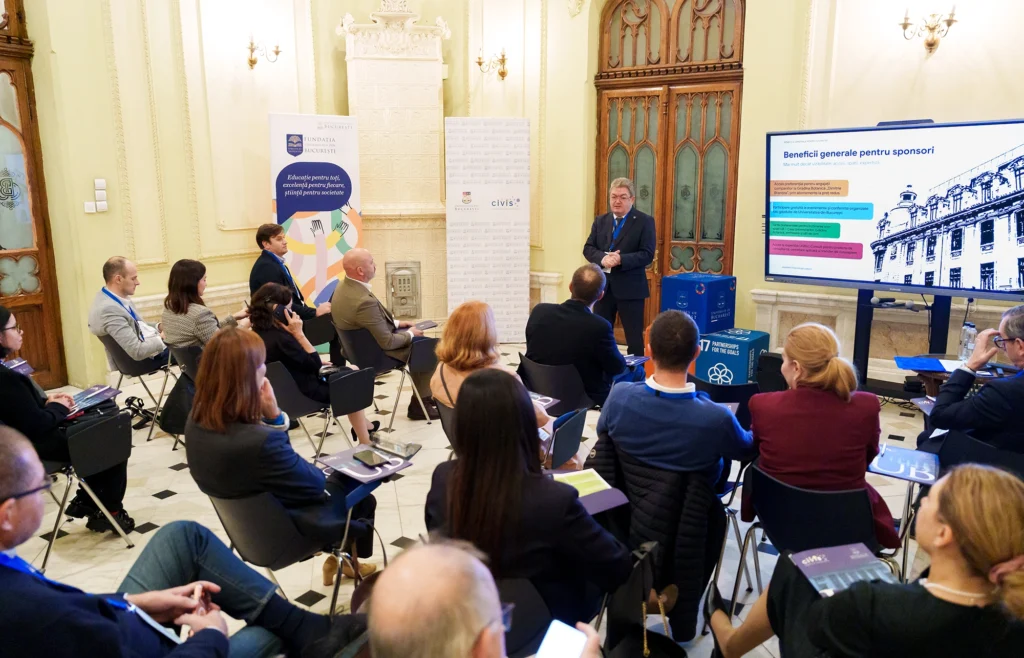
On Thursday, October 29th 2026, the University of Bucharest (UB) hosted the University of Bucharest Partners’ Meeting, an event dedicated to dialogue with representatives of the private sector and the identification of opportunities for collaboration in education, research, and innovation.
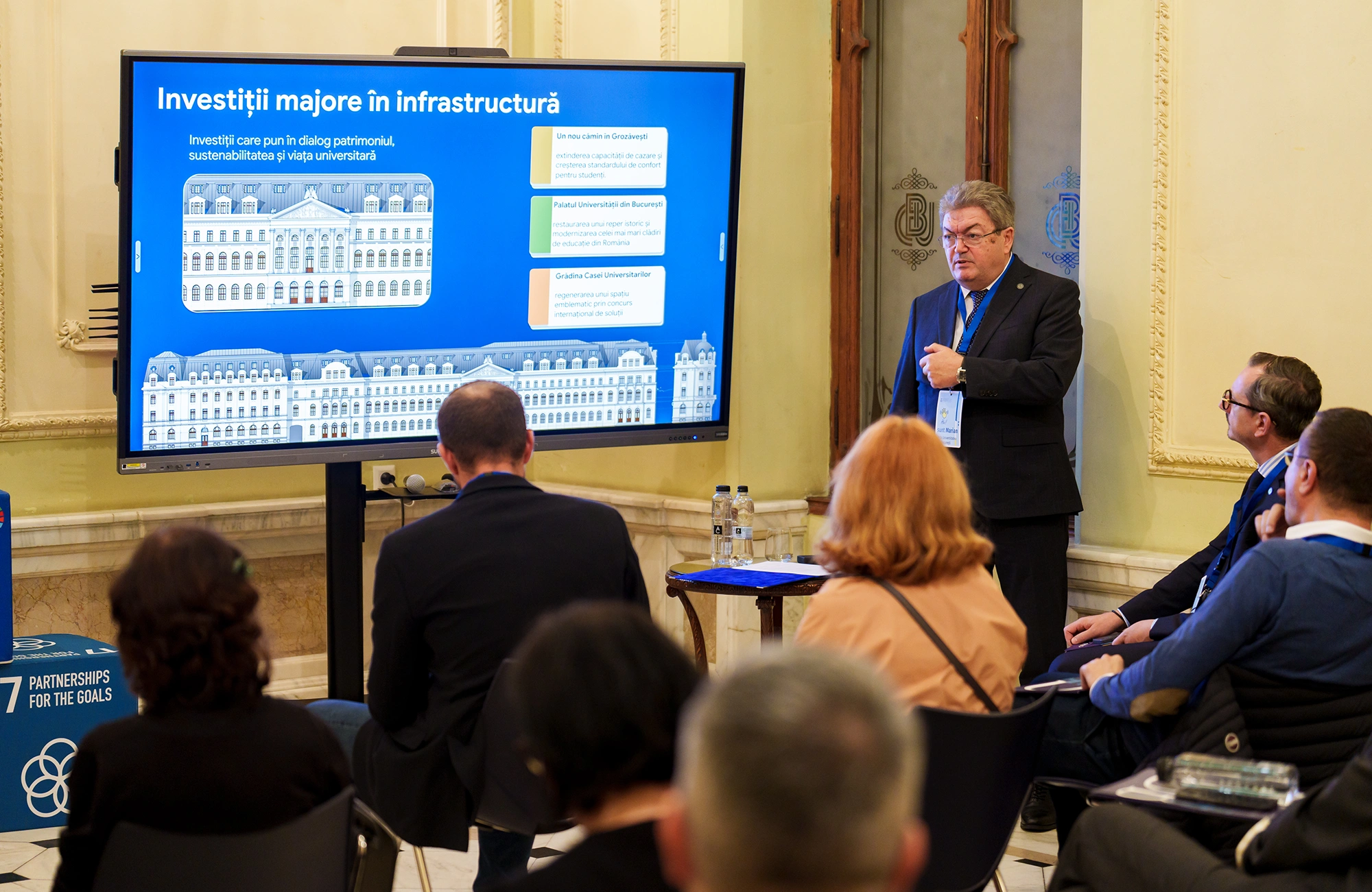
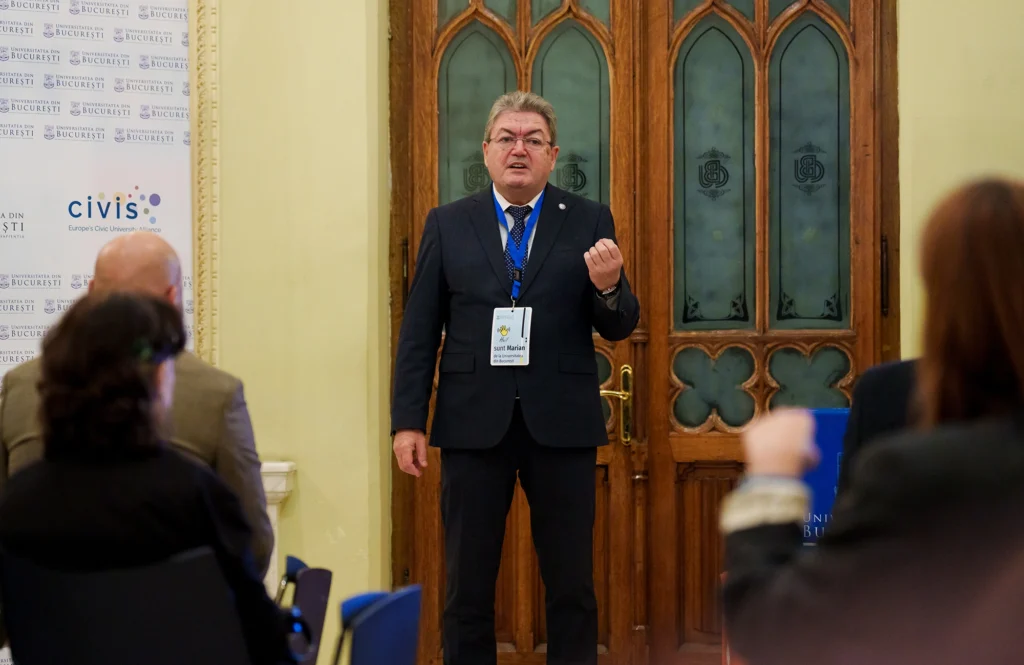
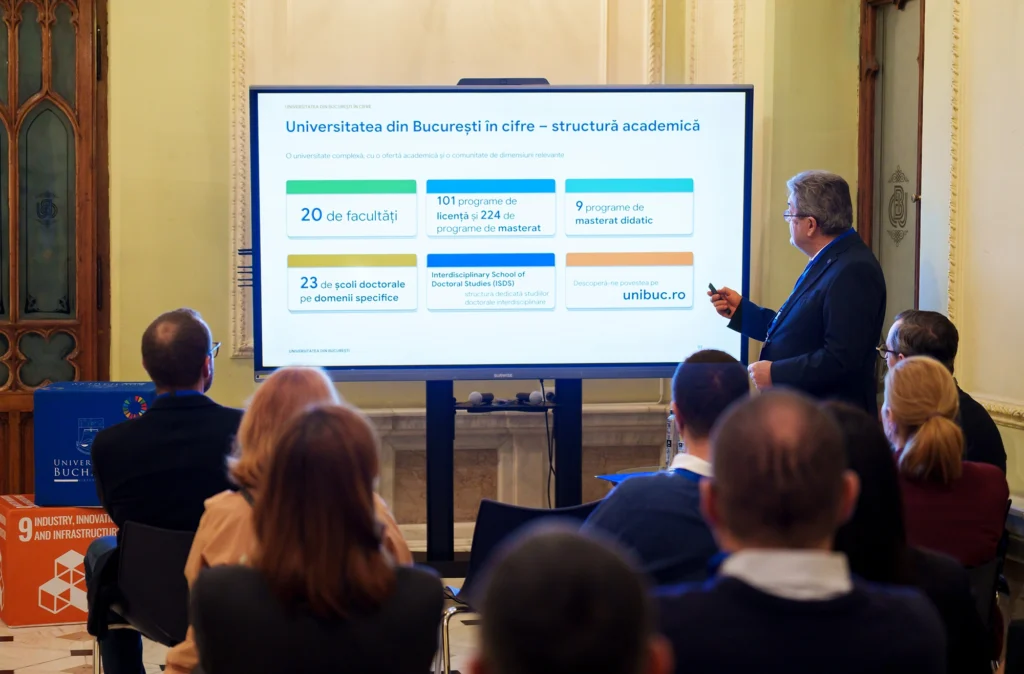
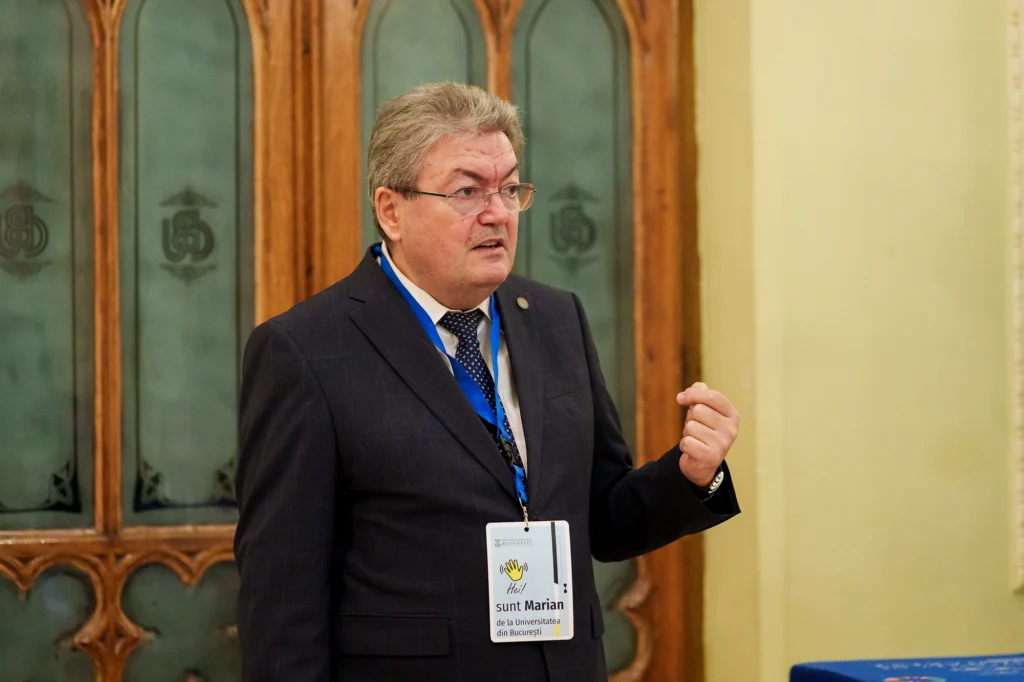
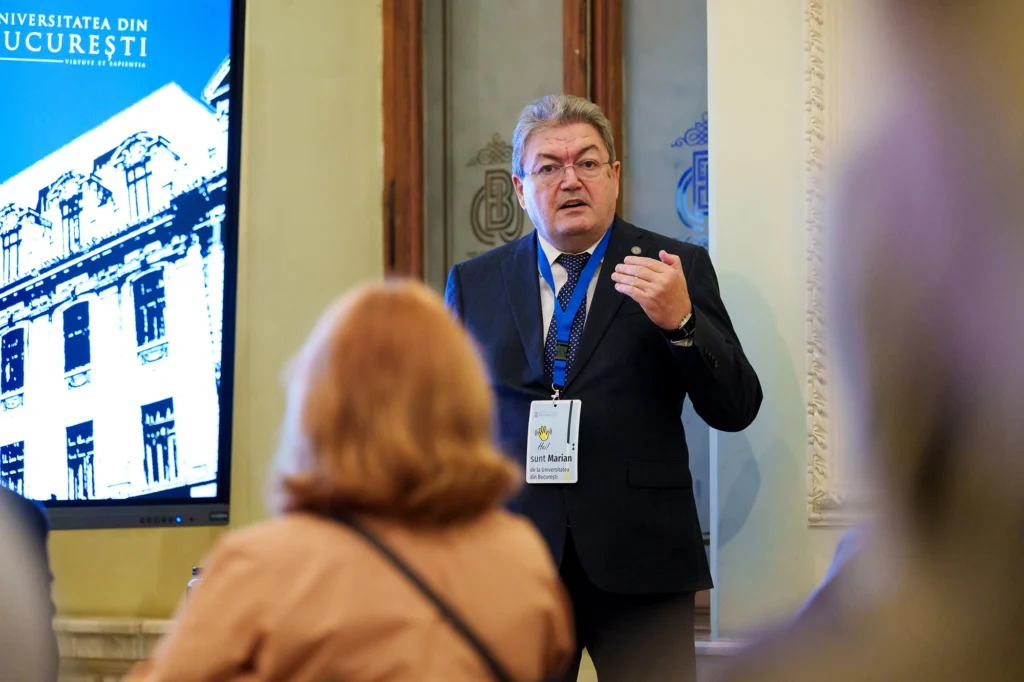
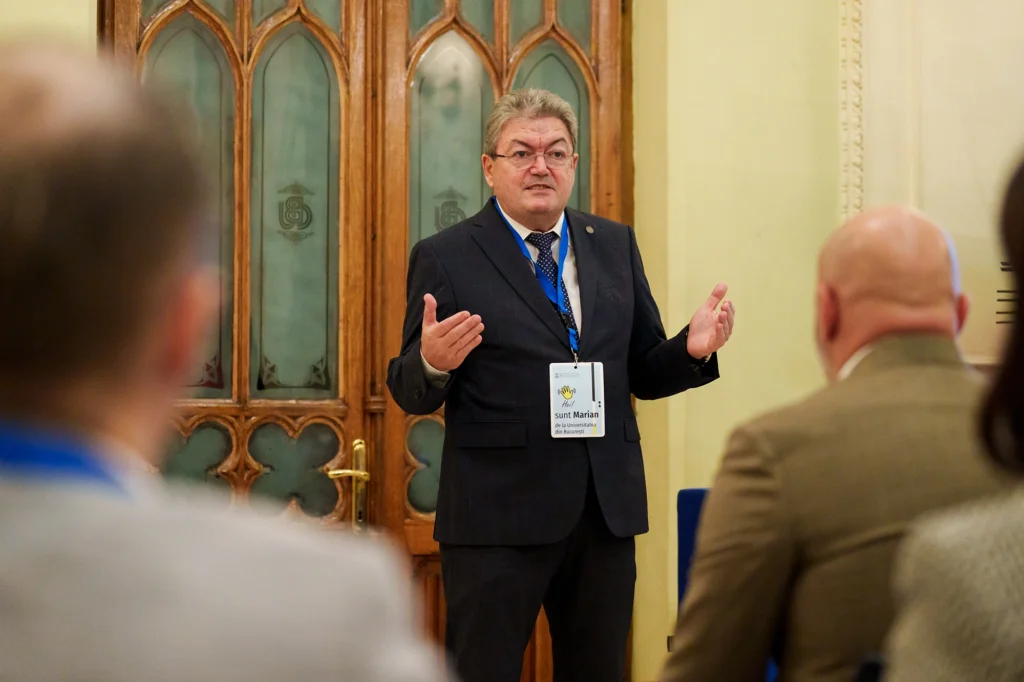
The meeting was opened by the Rector of the University of Bucharest, Professor Marian Preda, PhD, who presented the institution’s main development priorities and the projects through which UB aims to strengthen the links between academia, the city, and the wider community.
Discussions started from a shared perspective: developing the university means investing not only in infrastructure and academic resources, but also in initiatives that create opportunities for students, harness researchers’ expertise, and respond to the real needs of society.
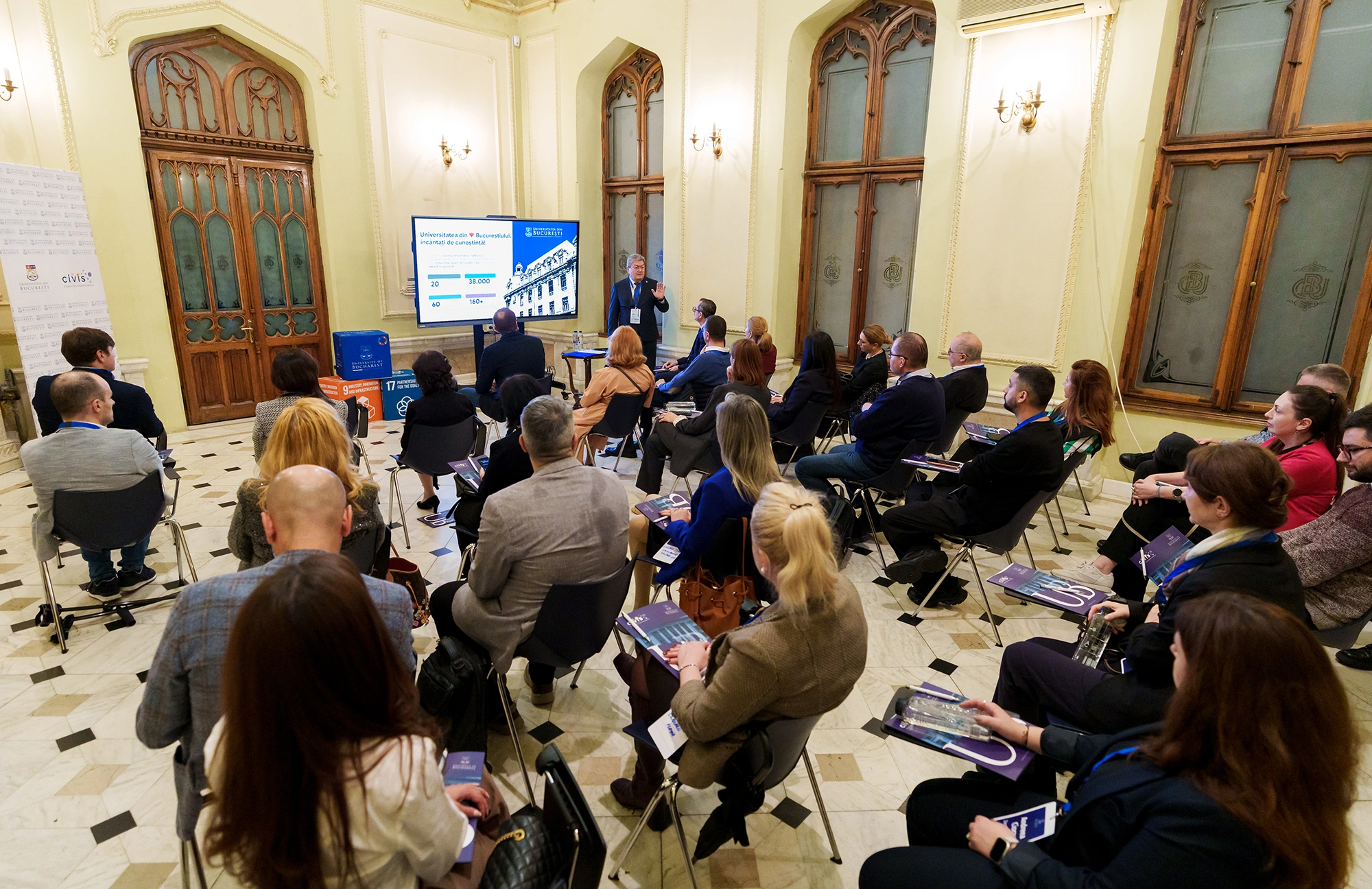
“I believe it is important to look at the past and the present, but above all, towards the future. The University of Bucharest has a responsibility towards society as a whole, and the projects we develop must address the needs of both the academic community and the city and the people around us,” said Professor Marian Preda, PhD.
Modern infrastructure and university spaces for the future
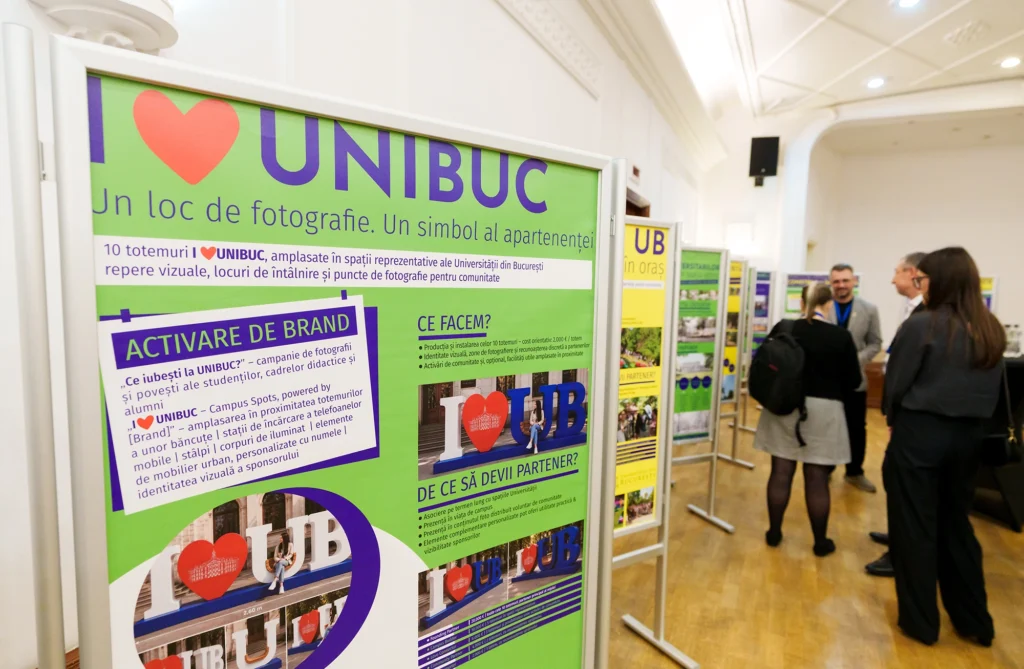
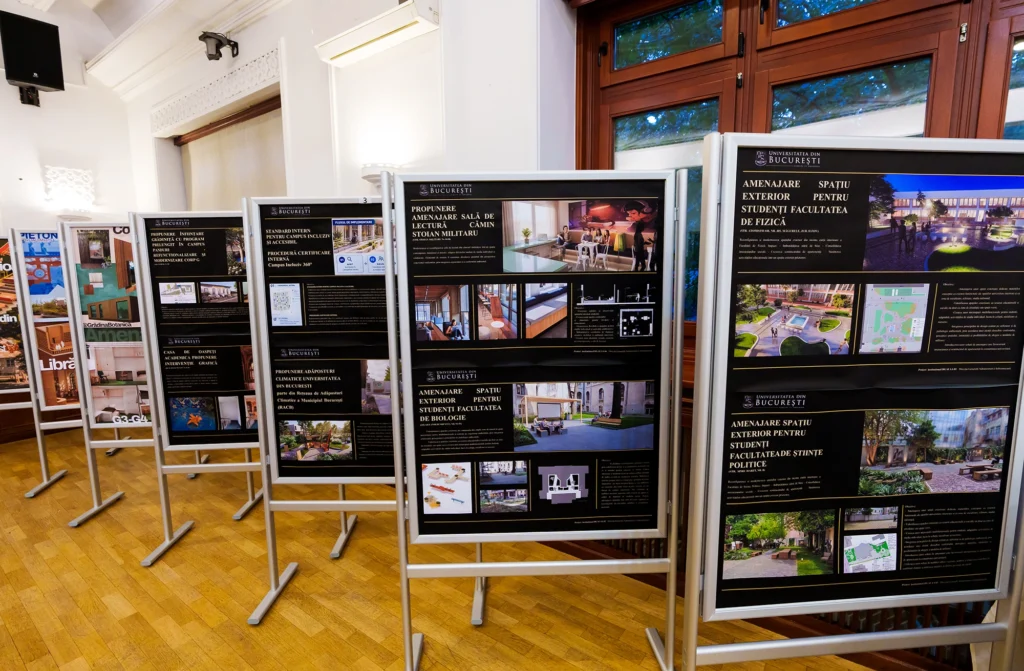
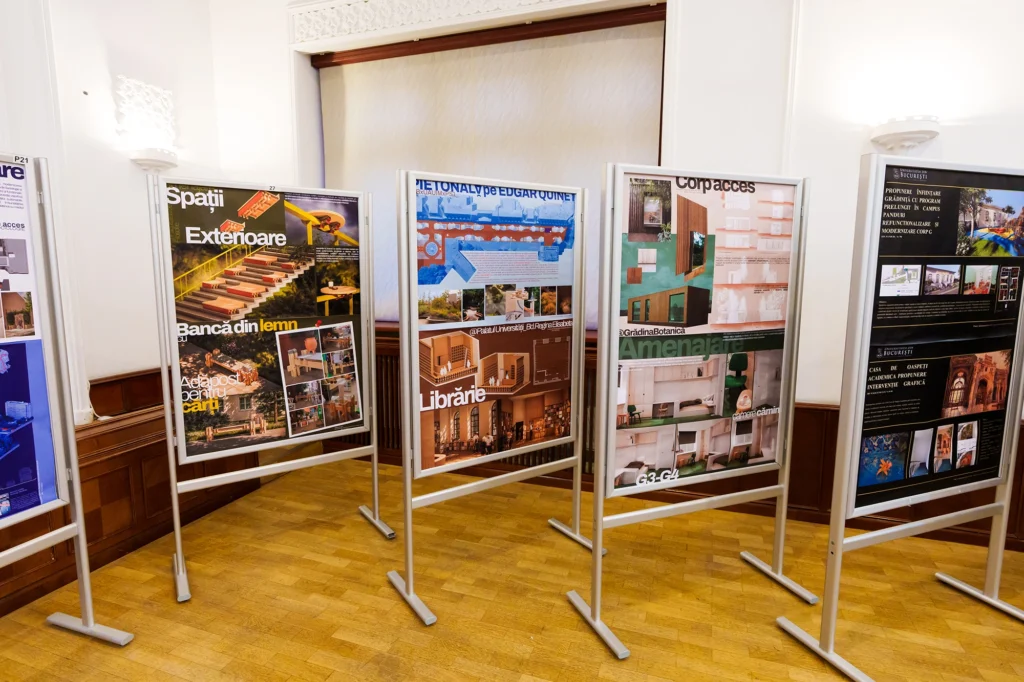
Investments in infrastructure aim to offer students, professors and researchers adequate study and work spaces suitable to modern-day requirements, and to open new possibilities for academic activities and collaboration with external partners.
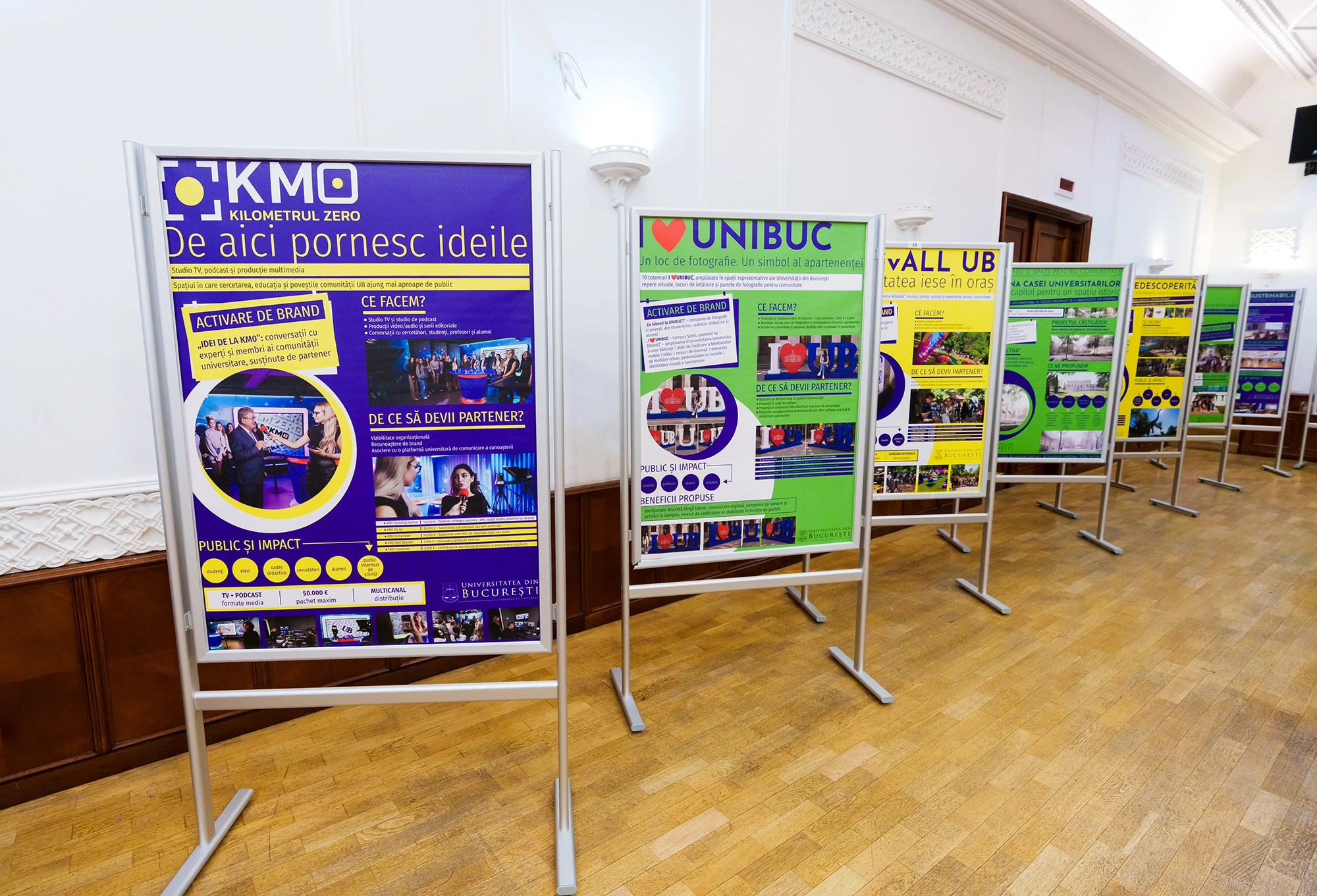
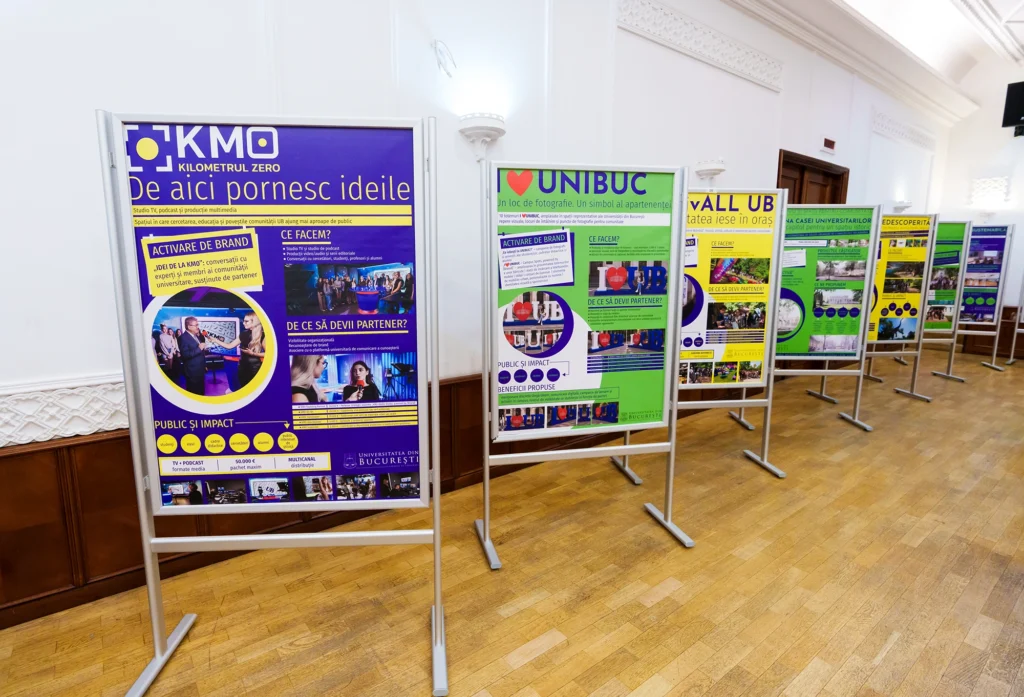
Among the projects that illustrate this direction is the University of Bucharest Multimedia Creative Studio, launched at the beginning of the 2026–2027 academic year. The studio provides students with facilities for practical activities in journalism, video production, radio, and digital communication. The investment, worth more than RON 500,000, received funding through the National Recovery and Resilience Plan and from a sponsorship from Raiffeisen Bank.
Another important project is the new student residence in the Grozăvești Campus, for which a building permit has been obtained. The project includes 238 double rooms, with a total capacity of 476 accommodation places, contributing to the expansion of the university’s student housing infrastructure.
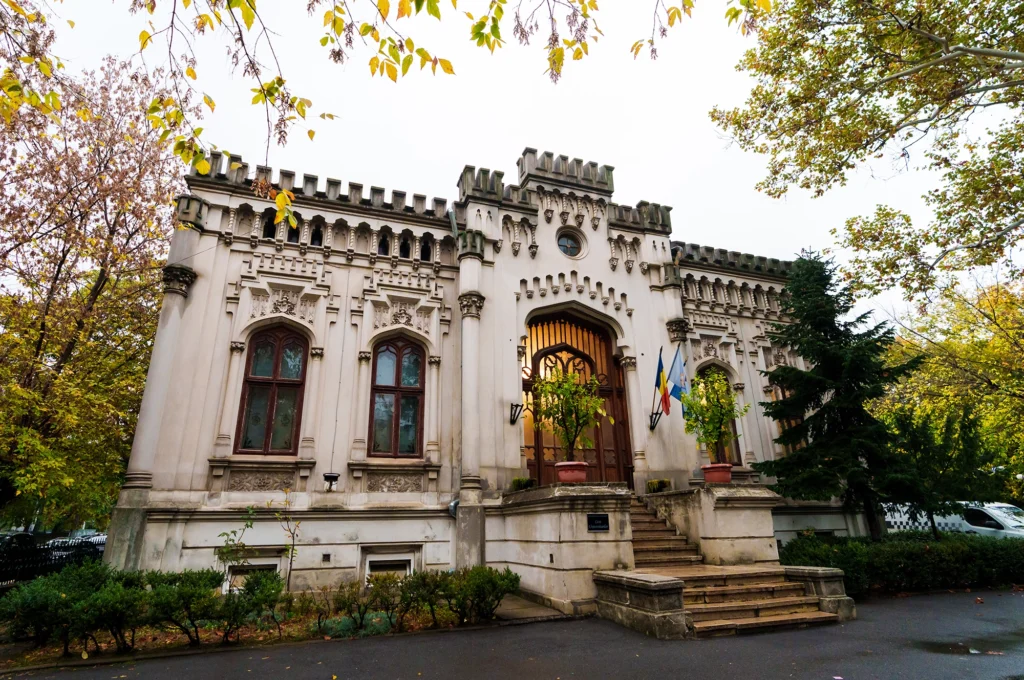
Following the same direction, another initiative is the repurposing of the University House Garden, for which the winner of the international design competition was announced in July 2026. The project aims to make the most of the existing heritage and transform the edifice into a space open to cultural, educational, and community activities, creating new opportunities for interaction between the University and the city.
These initiatives reflect UB’s commitment to developing a modern, sustainable university environment connected to the needs of the community.
Research, consultancy and inovation with an impact on society
Another strategic priority is to make the most of the University of Bucharest’s academic and scientific expertise by expanding research activities, consultancy services, and initiatives that facilitate knowledge transfer to the economic and social sectors.
“We are investing in infrastructure, advancing interdisciplinary research, connecting to European university networks via the CIVIS Alliance and we aim to make the most of our colleagues’ expertise through iniatives such as UniBuc Consult”, said the Rector of The University of Bucharest, Marian Preda.
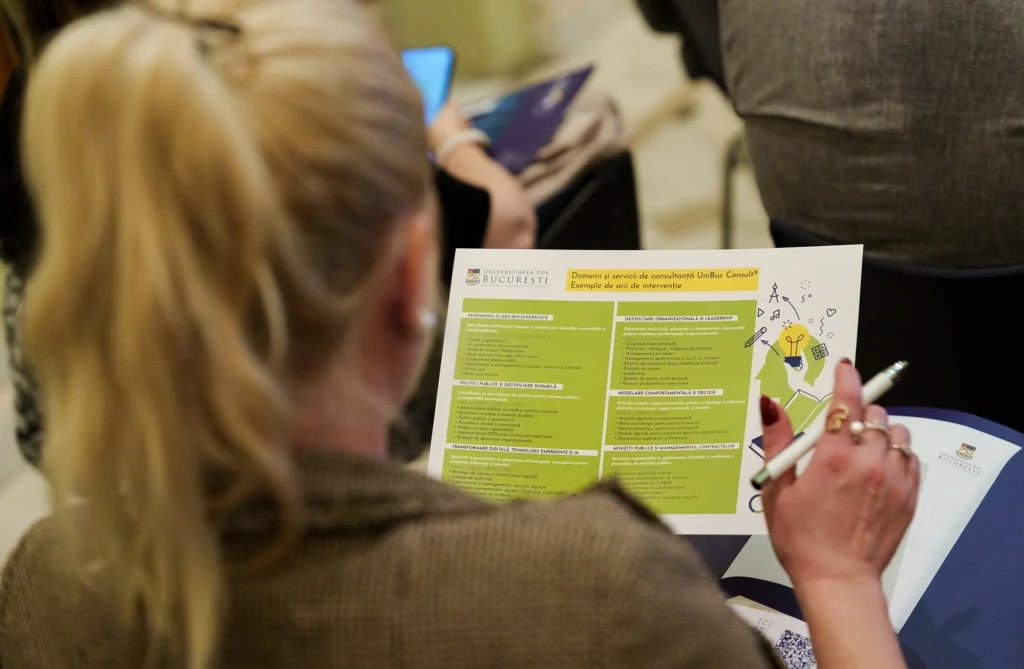
In this context, UniBuc Consult represents a mechanism through which UB’s academic and research expertise can be applied to practical projects, professional training programmes, and initiatives designed for public institutions and private partners. The University thus aims to consolidate the links between researchers, organisations, and communities, including through collaborations that can help inform decision-making and public policy.
Areas of interest include studies on young people’s perceptions and expectations, analyses of demographic challenges, and research into topics relevant to societal development. The interdisciplinary expertise of the academic community can provide organisations and public institutions documented perspectives on current issues and help identify potential solutions.
Developing an innovation and entrepreneurship ecosystem, including initiatives such as an innovation hub and business incubator, represents an opportunity to bring research closer to the business sector and support the transformation of ideas into projects with practical applications.
One example of how university expertise can contribute to community development is the UNESCO International Geopark Țara Hațegului, managed by the University of Bucharest. The geopark showcases the region’s natural and cultural heritage while supporting educational activities and local development initiatives.
Another initiative in this direction is a project proposed for the University of Bucharest’s Dimitrie Brandza Botanical Garden, which aims to establish a permanent exhibition dedicated to the plants, fossils, and dinosaurs of Țara Hațegului. Inspired by research conducted in the UNESCO International Geopark Țara Hațegului, the project will bring forth scientific dinosaur reconstructions, Cretaceous plants, fossils, and interactive educational installations for children and families. The initiative also offers opportunities for private-sector involvement through support for specific components of the exhibition and association with a long-term educational project that brings research closer to the public.
By strengthening these strategic priorities, UB aims to develop collaborations in which knowledge and research address real-world challenges and generate benefits for society.
Equity, merit and opportunities for the academic community
A third development priority focuses on student experience, access to education, and strengthening the University’s relationship with its alumni and communities in Romania and abroad.
One relevant example is the UB SEED programme, through which the University supports talented pupils from disadvantaged backgrounds, providing them with access to online courses, mentoring, educational activities, and material and/or financial support over five academic years. The programme aims to help reduce inequalities in access to education and personal development.
The University’s engagement with the wider public is also supported by initiatives that bring education, science, and culture closer to the community. festivALL UB, organised by the University of Bucharest’s Communication and Public Relations Department, transforms the Botanical Garden into a space for gathering and exploration, featuring workshops, live experiments, creative activities, music, and relaxation areas. The event aims to offer school pupils an interactive experience and spark their interest in education and knowledge.
The conference series “Science in the Spotlight”, organized by the Communication and Public Relations Department in collaboration with the SciPublic Forum Association, follows the same direction. The events bring together professors, researchers and specialists from various fields and create a dialogue frame between the academic community and the general public. Through lectures, applied examples and Q&A sessions, the initiative addresses current topics and promotes access to quality scientific information, while developing critical thinking.
The alumni community of the University of Bucharest is also an important resource for developing the institution and for connecting it to the professional world and society in its whole. By collaborating with the UB Alumni Association, the University aims to strengthen its ties to its graduates, to highlight their professional paths and contributions to various fields and to create new opportunities for dialogue, mentorship and collaboration between generations. An important aspect of this endeavor is the development of relationships with alumni pursuing international careers and with the Romanian academic diaspora. In this context, the Global Romania initiative, developed by the Romanian United Foundation, which the University of Bucharest joined in July 2026, provides a framework for connecting Romanians across the diaspora and building partnerships and opportunities that benefit Romanian communities around the world.
By strengthening its connections with alumni in Romania and abroad, UB aims to harness the experience, expertise, and professional networks of its community while reinforcing the relationship between the University and the generations contributing to societal development.
The dialogue with the private sector, a starting point for new collaborations
“We aren’t just looking for sponsors. We are looking for partners. We want to build relations in which we can share ideas, experiences and resources and develop projects with practical results with have a positive long-term impact. We are open to dialogue and we believe there are many collaboration opportunities that we can discover together” concluded professor Marian Preda, PhD.
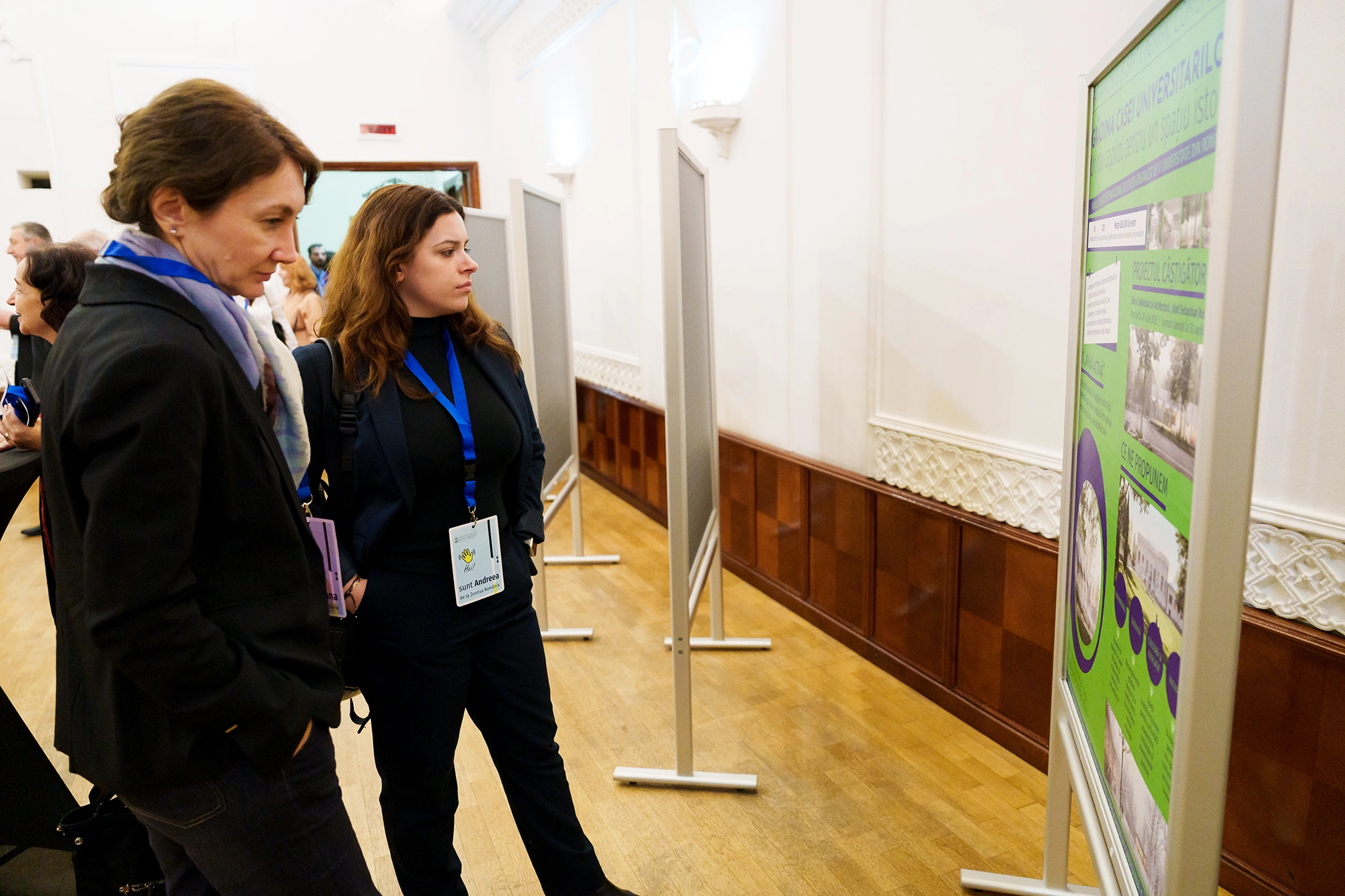
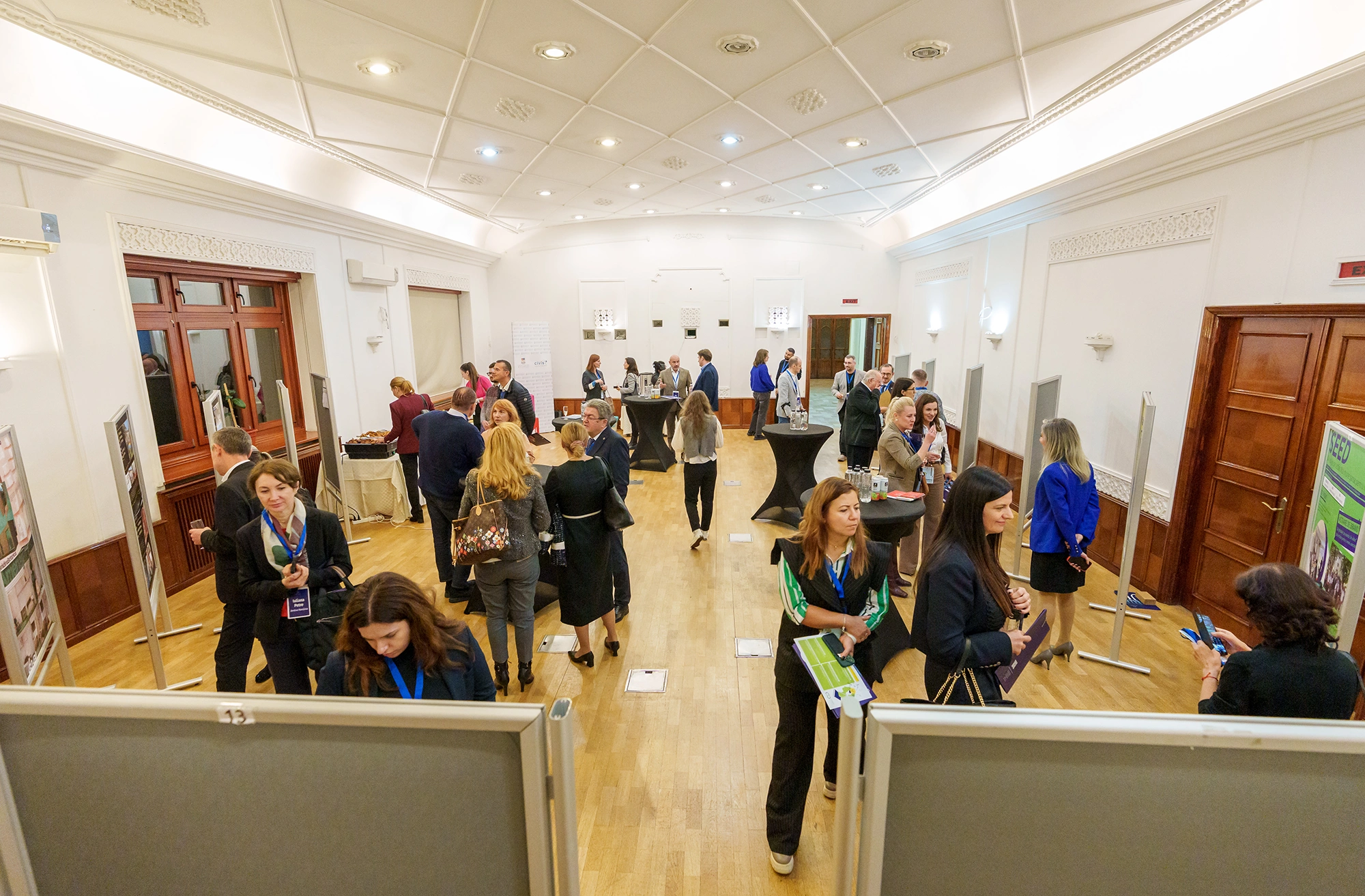
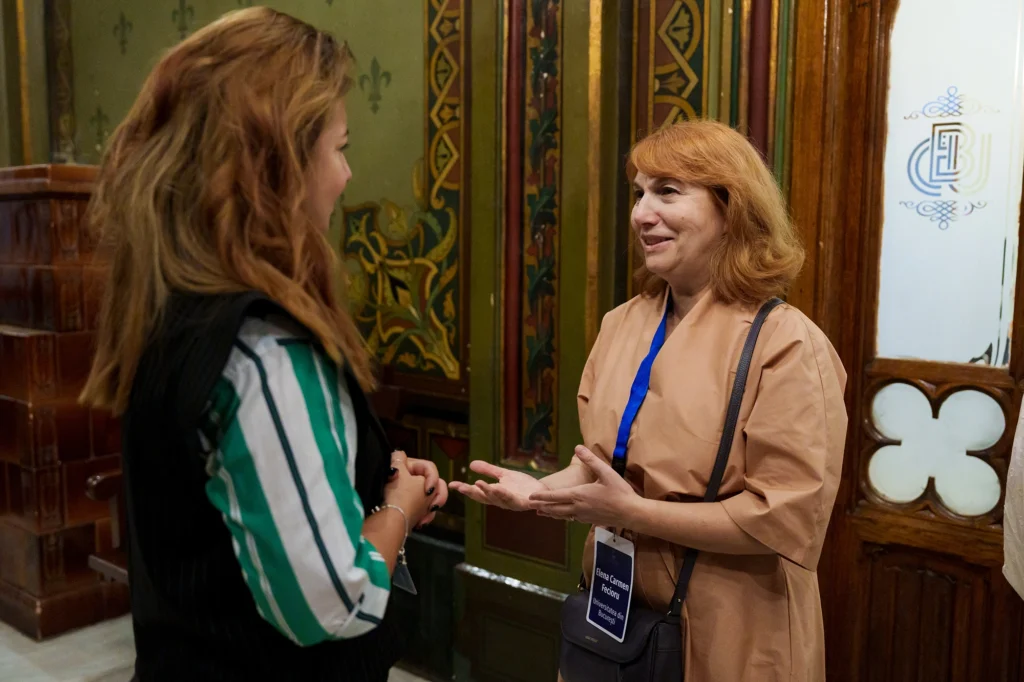
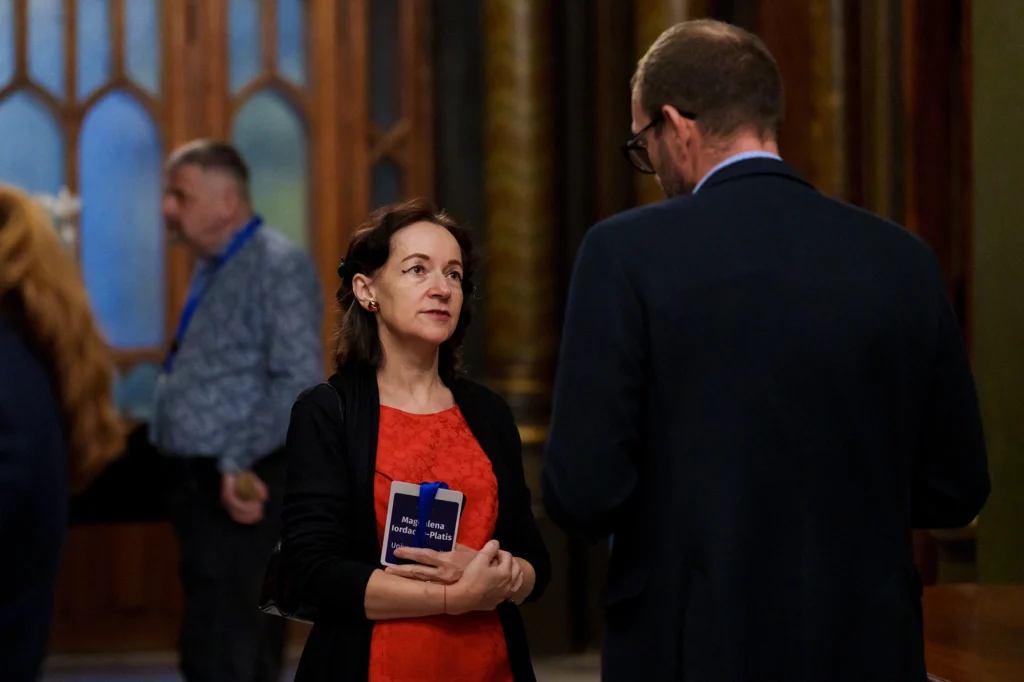
Beyond presenting the projects, the meeting provided a platform for discussing the priorities of participating organizations and exploring potential models of collaboration with the University of Bucharest.
The exchange of perspectives focused on identifying common interests and exploring how academic expertise, private-sector resources, and organizational experience could contribute to developing initiatives relevant to students, researchers, and society.
Partnerships with the University of Bucharest can take many forms, from supporting education and research projects to developing educational content, community experiences, and innovation-focused initiatives. The objective is to build collaborations adapted to shared interests, which have the ability to generate practical results and contribute to the long-term development of the University and of society.
Through this reunion, The University of Bucharest reaffirms its openness to partnership focused on knowledge, which nurture performance and create opportunities for the academic community and for society.








Postări asemănătoare:
 The University of Bucharest Won the “Interdisciplinary Institutional Platform for Excellence in Research, Development and Professional Training in the Field of Archaeological Sciences” Project within the “Institutional Development Projects – RDI Excellence Funding Projects” Competition
 The University of Bucharest Won the “Interdisciplinary Institutional Platform for Excellence in Research, Development and Professional Training in the Field of Archaeological Sciences” Project within the “Institutional Development Projects – RDI Excellence Funding Projects” Competition
