




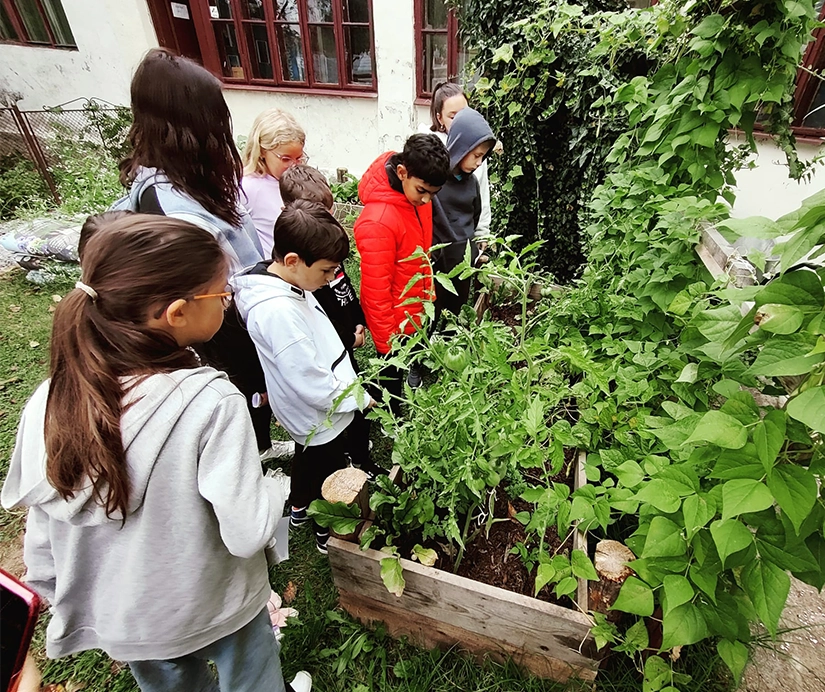
The Garden of the House of the UNESCO International Geopark Țara Hațegului, managed by the University of Bucharest, now has a new appearance and new functionality. Both were gained from the “DinoGarden – permaculture at the museum” project that ended recently.
The project aimed to create a functional area, based on permaculture principles, able to continue the experience of tourists visiting the exhibition “Firedrakes, dragons, dinosaurs” set up at the Țara Hațegului Geopark House.
“The project was based on a need that I noticed among those who arrived in the area organized within the project. Last year, when our visitors, volunteers, and partners came to the Geopark House, they had a relatively functional yard, but with great potential for improvement. Grassy paths greeted you, a gazebo where you could only sit if the weather was good because it had no roof, on benches made by volunteers from wooden pallets. Behind the courtyard was a second building, which no longer had any functionality. We decided to do something to make the best use of the available space and resources, and that’s how the idea of this permaculture project was born”, says Maria Crețescu, the project coordinator.
Following a detailed analysis carried out within the project, the needs of those who carry out activities at the Geopark House or visit it were identified. To adopt the best solutions, the project team worked with a permaculture designer, Cantemir Păcuraru. With the help of the specialist, a permaculture design was created to meet the needs already identified and to be a model of sustainability.
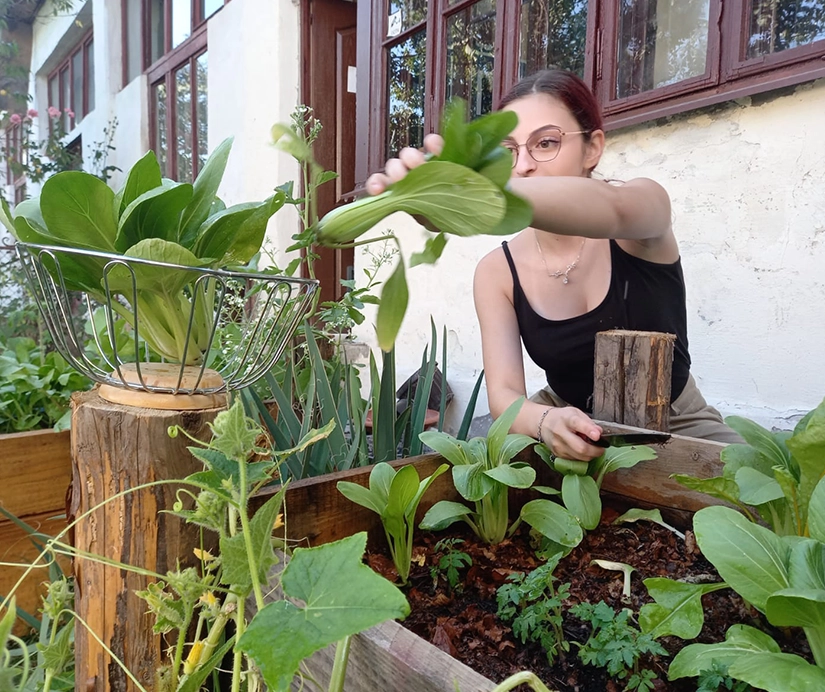
After many hours of work, the driveways were redone and filled with gravel to allow rainwater to seep directly into the ground without stagnating or ending up in drains. The structure behind the courtyard has been converted into a large gazebo with tables and benches that can host workshops for up to 34 people from spring to fall, regardless of the weather. The gazebo has a roof from which rainwater is collected in a barrel and used to water the garden in periods of low rainfall. The former gazebo was preserved, but it was given a very important role, that of collection. In one part, two composting boxes were made, 1 m3 each, for the organic matter resulting from the vegetation in the yard (grass, branches, fruit fallen from the trees or other organic remains). On the other side, in front of the composter, an area was set up for bins dedicated to the selective collection of garbage – household, plastic and metal, paper.Three raised layers were also made for growing plants, only good to eat as soon as they were picked. These raised layers also have an educational role, because visitors can see what the plants they eat look like in their natural environment. The local community can also learn information on how to grow plants without using chemical fertilizers. An “earthworm tower” container, placed in one of the raised layers, has the role of producing compost so useful for soil fertilization. In addition, in the office area, a space for obtaining compost in a hermetically sealed container was set up, based on the Japanese bokashi method.
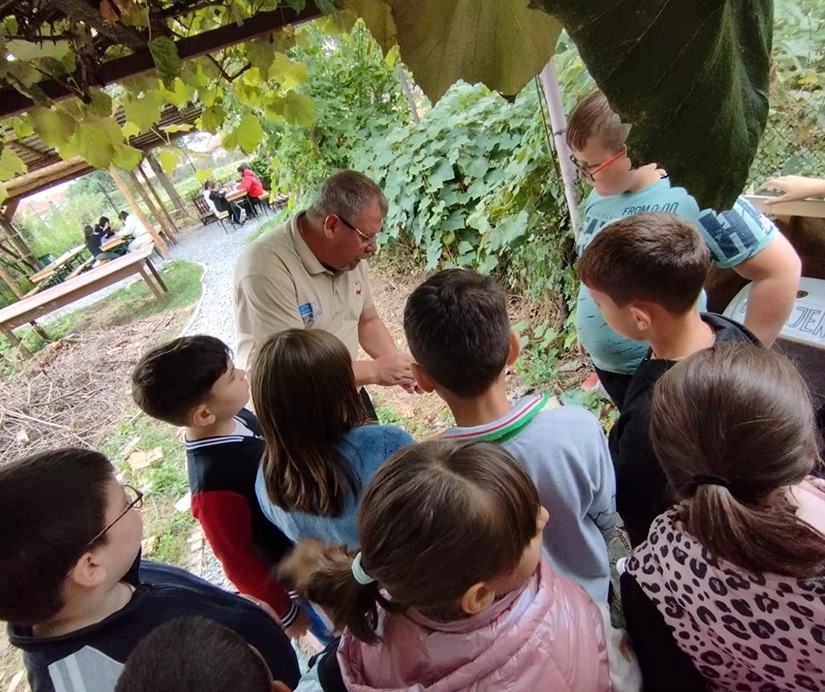
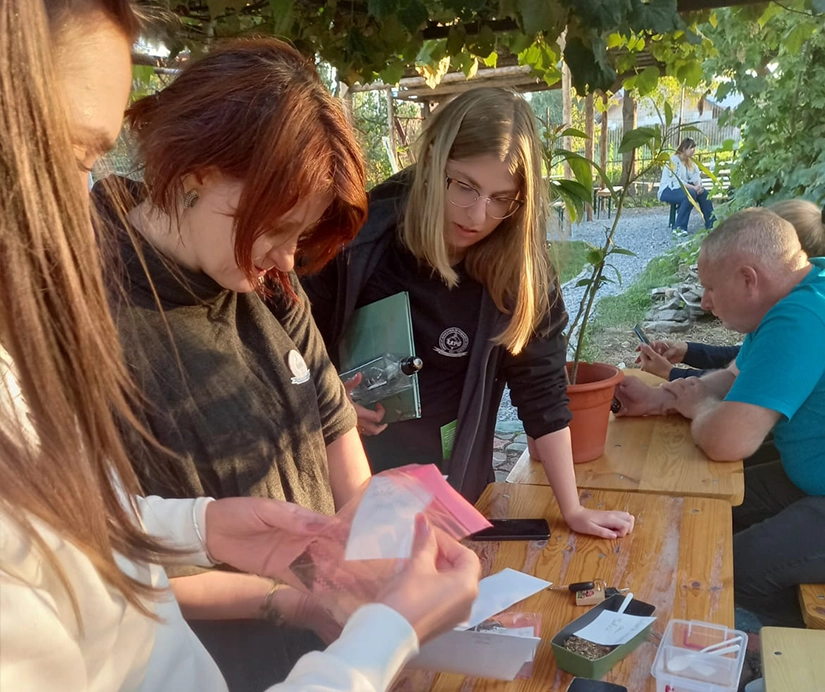
“Thanks to the DinoGarden project, we have laid the foundations of a forest garden where more than 50 new species have been planted. The forest garden mimics a natural forest, except that the plants are mostly edible for humans and have well-established roles in this created ecosystem. In the forest garden that we created, we have seven layers of vegetation – fruit trees, shrubs, bushes, climbing plants, ground cover plants, roots and mushrooms”, says Maria Crețescu. The utility of all the arrangements within the project was tested through several theoretical activities combined with practical ones, in which students from the partner school, Geoparc volunteers and local residents participated. As a result of these activities, three new educational workshops have resulted, which will help visitors, but also curious students to learn more about nature, to learn to better recognize vegetables, how to selectively collect waste or even to rearrange the house according to the principles of permaculture.
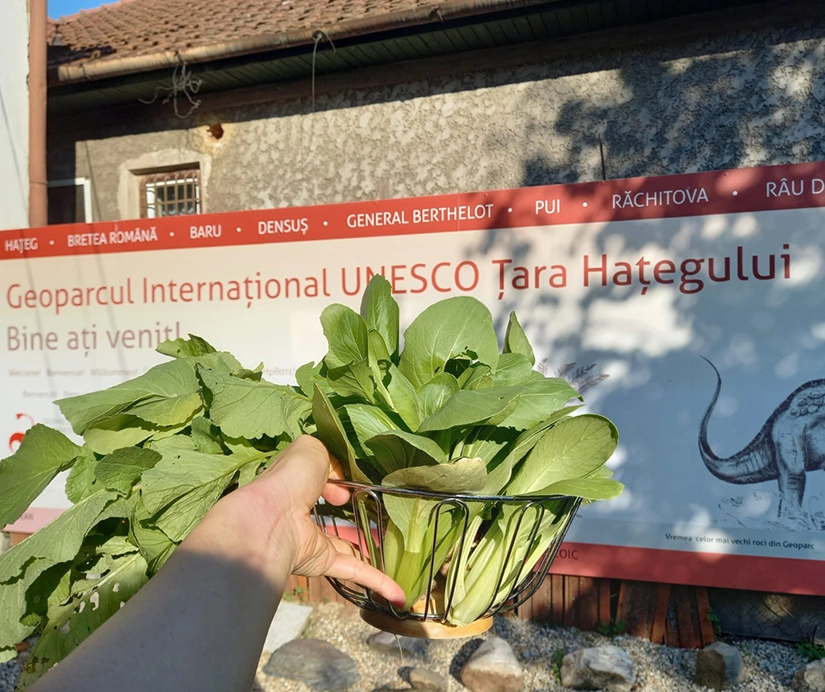
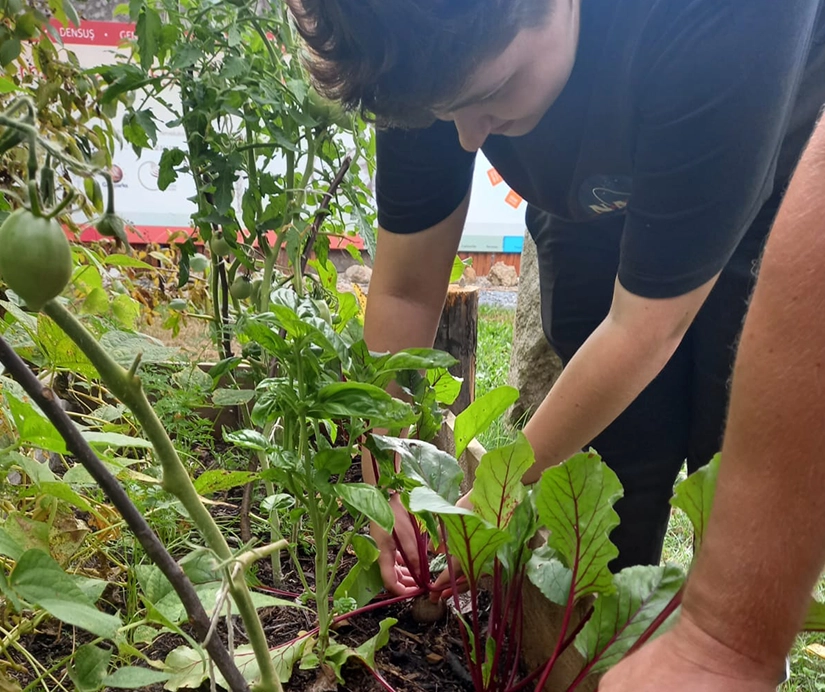
The event called “Harvest Day” was part of the project and was a good opportunity to exchange seeds and valuable advice with members of the local community.
The “DinoGarden – permaculture at the museum” project was carried out by Drag de Hațeg Association and the UNESCO International Geopark Ţara Hațegului, University of Bucharest. The partners in the project were the Women’s Association from Santamaria Orlea, the Secondary School from Sîntămaria Orlea and AccentMedia. The project was financed by the Partnership Foundation and MOL Romania after winning a national project competition.
SECŢIUNE ACCESIBILIZATĂ PENTRU PERSOANELE CU DIZABILITĂŢI DE VEDERE
Postări asemănătoare:
 Three Villages in Hunedoara Country on the Territory of the UNESCO International Geopark Ţara Hațegului, managed by the University of Bucharest, Will Host Award-Winning Theater Performances this Year at the UNITER Gala
 Series of events of the Bucharest University Publishing House – Bucharest University Press: attendance at “Bookfest” International Book Fair, poetry marathon, celebration of the “International Book Day”, reopening of the EUB-BUP bookstore and new editorial launches
 Volunteers from the UNESCO International Geopark Țara Hațegului Prepared to Become Ambassadors of the Geopark
 A new species of fossil turtle, discovered on the territory of the UNESCO International Geopark Țara Hațegului of the University of Bucharest
