




Dynamics of nanoparticles transport through cellular barriers relevant for toxicology and drug delivery systems
Project title: Dynamics of nanoparticles transport through cellular barriers relevant for toxicology and drug delivery systems
Project director: Assoc. Prof. Miruna-Silvia Stan
University of Bucharest/Faculty of Biology/Dep. of Biochemistry and Molecular Biology
Tel: +40761976161
E-mail: miruna.stan@bio.unibuc.ro
Summary: As the full understanding of the mechanism of nanoparticles (NPs) transport across the biological barriers has not yet been achieved, re-evaluation of the in vitro models used to analyze the transport in correlation with the NPs characteristics is mandatory. The present project aims to perform a complex analysis of the biological effects and transport mechanism of NPs with different characteristics (chemical structures, sizes, surfaces) through several important biological barriers (skin, lung, intestinal and blood-brain barriers). The results will generate robust computational 3D models for predicting the behavior, performance and toxicity of NPs in vivo, and also for designing nano-devices with improved efficiency in this “online” era. Using commercially available in vitro barriers or cell culture models developed by the team members based on their expertise, the effects triggered during exposure to NPs will be analyzed. The implementation of the specific objectives will bring multiple elements of originality and innovation in the field of cell culture models, nanotoxicology, nanomedicine and bioinformatics, in which the project leader and team members have significant and representative scientific achievements. This project has an important social and economic impact, with applicable directions in drug delivery purposes, diagnostic imaging or other biomedical applications.
Funding agency: UEFISCDI
Contract number: 81TE/2022
Project code: PN-III-P1-1.1-TE-2021-1375
Project acronym: TRANS-NANO-BIO
Project duration: 24 months (12.05.2022 – 11.05.2024)
Total funding: 450000 RON
Project members: Conf. Dr. Miruna-Silvia STAN (project leader)
Conf. Dr. Maria MERNEA (postdoctoral researcher)
Lect. Dr. Sorina VOICU (postdoctoral researcher)
Dr. Cristina VOINEA (postdoctoral researcher)
Drd. Mirela SERBAN (PhD student)
Drd. Bogdan MIU (PhD student)
Project objective: The main objective of this research project is represented by the study of nanoparticles transport and toxicity across biological barriers using innovative, mechanistic-based strategies, that are of primary interest for nanotoxicology and for designing highly biocompatible and efficient next-generation therapy nano-devices.
Expected results for this project
– validation of currently available in vitro models to study the nanoparticles biological effects and transport,
– obtaining insights regarding the mechanism of nanoparticles translocation, and the correlation with their physicochemical characteristics,
– generation of predictive models for in vivo biological effects and performance of nanoparticles delivery systems,
– scientific peer-reviewed publications and results’ presentation as posters and talks at international conferences.
Results of Phase I – 2022
– poster at international conferences
- Voicu S.N., Voinea I.C., Stan M.S. “Assessment of the in vitro toxicity induced by rare earth-doped phosphor nanoparticles on human lung fibroblast cells”, NanoBioMat2022 winter edition, 24-26 November 2022, Online.
- Stan M.S., Voinea I.C., Voicu S.N. “In vitro evaluation of rare earth-doped phosphor nanoparticles to assess their anti-tumoral efficiency on lung cancer cells”, The 8st International Electronic Conference on Medicinal Chemistry, 1–30 November 2022. https://doi.org/10.3390/ECMC2022-13312
– research article published in ISI journal (Q1)
- Florea DA, Grumezescu V, Bîrcă AC, Vasile BȘ, Iosif A, Chircov C, Stan MS, Grumezescu AM, Andronescu E, Chifiriuc MC. Bioactive hydroxyapatite-magnesium phosphate coatings deposited by MAPLE for preventing infection and promoting orthopedic implants osteointegration. Materials 2022; 15(20), 7337. https://doi.org/10.3390/ma15207337
– review paper published in ISI journal (Q2)
- Miu BA, Dinischiotu A. New green approaches in nanoparticles synthesis: an overview. Molecules. 2022; 27(19):6472. https://doi.org/10.3390/molecules27196472
– participation at practical course
- EMBO Practical Course “Current methods in cell biology”, Heidelberg, Germany, 4 – 13 September 2022.
The summary of the results obtained
Results of Phase II – 2023:
– posters at international conferences
- Voicu S., Voinea I.C., Niculescu A., Mihaescu D., Grumezescu A., Stan M. “Characterizing the biological behavior of Fe3O4 nanoparticles conjugated with acridine orange using in vitro co-culture systems relevant to skin, lung and gut barrier models”, in Proceedings of the 4th International Electronic Conference on Applied Sciences, 27 October–10 November 2023, MDPI: Basel, Switzerland, Online. https://sciforum.net/paper/view/15411
- Adeniyi, B., Pieraccini, L., Cirstea, G., Vilcoci, S., Mernea, M., Stan M. “Evaluation of the anti-cancer activity of Goji leaves extracts against HT-29-MTX colon cancer cell line”, in Proceedings of the 4th International Electronic Conference on Foods, 15–30 October 2023, MDPI: Basel, Switzerland, Online. https://sciforum.net/paper/view/15016
- Dula A.G., Stan M.S. “Fluorescent PLGA nanoparticles: in vitro toxicity study using a co-culture of human keratinocytes and dermal fibroblasts”, NanoInnovation2023, 18-22 September 2023, Rome, Italy.
- Voicu S.N., Voinea I.C., Gosee C., Carteret C., Callewaert M., Moreau J., Chuburu F., Stan M.S. “Biocompatibility evaluation of chitosan fluorescent nanohydrogels using human EpiDermTM 3D model”. Toxicology Letters 384S1 (2023) S73-S300, p. S120-121. The 57th Congress of the European Societies of Toxicology (EUROTOX 2023), Ljubljana, Slovenia, 10 –13 September 2023.
- Voinea I.C., Voicu S.N., Mernea M., Miu B.A., Serban M.V., Stan M.S. “Prediction of respiratory toxicity induced by P25 Degussa nanoparticles using human EpiAirway™ 3D model”. Toxicology Letters 384S1 (2023) S73-S300, p. S172. The 57th Congress of the European Societies of Toxicology (EUROTOX 2023), Ljubljana, Slovenia, 10 –13 September 2023.
- Voinea I.C., Voicu S., Mernea M., Miu B., Serban M., Stan M. “Using EpiDermTM to evaluate the toxic effects of P25 Degussa nanoparticles on skin barrier”, in Proceedings of the 4th International Online Conference on Nanomaterials, 5–19 May 2023, MDPI: Basel, Switzerland, Online. https://sciforum.net/paper/view/14460
– research articles published in ISI journals (Q2)
- Burdusel A-C, Neacsu IA, Birca AC, Chircov C, Grumezescu A-M, Holban AM, Curutiu C, Ditu LM, Stan M, Andronescu E. Microwave-assisted hydrothermal treatment of multifunctional substituted hydroxyapatite with prospective applications in bone regeneration. Funct. Biomater. 2023, 14(7), 378. https://doi.org/10.3390/jfb14070378
- Marinescu G, Culita DC, Mocanu T, Mitran R-A, Petrescu S, Stan MS, Chifiriuc MC, Popa M. New nanostructured materials based on mesoporous silica loaded with Ru(II)/Ru(III) complexes with anticancer and antimicrobial properties. Pharmaceutics 2023, 15(5),1458. https://doi.org/10.3390/pharmaceutics15051458
- Miu BA, Voinea IC, Diamandescu L, Dinischiotu A. MRC-5 human lung fibroblasts alleviate the genotoxic effect of Fe-N co-doped titanium dioxide nanoparticles through an OGG1/2-dependent reparatory mechanism. International Journal of Molecular Sciences 2023, 24(7), 6401. https://doi.org/10.3390/ijms24076401
Scientific and Technical Report
Results of Phase III – 2024:
– posters at international conferences
- Mernea M., Voicu S., Voinea C., Stan M. “Simulation on the interaction between FITC functionalized gold nanoparticles and lipid bilayers”, in Proceedings of the 3rd International Electronic Conference on Biomolecules, 23–25 April 2024, MDPI: Basel, Switzerland.
- Stan M.S., Dungu C., Peligrad M.I., Daraban B.S., et al. “Crossing the pulmonary and dermal barriers by PLGA nanoparticles. An in vitro study with cell co-culture models”, FEBS Open Bio 14 (Suppl. S2) (2018), p. 456 (FEBS 2024 – 48th FEBS Congress, 29 June–3 July 2024, Milano, Italy).
– research articles published in ISI journals (Q1)
- Gosée C, Moreau J, Cadiou C, Callewaert M, Henoumont C, Larbanoix L, Molinari M, Voicu SN, et al. Multimodal nanogels combining ZW800-1 as an optical absorber and gadolinium chelates for multispectral optoacoustic tomography (MSOT) and magnetic resonance imaging (MRI). Chem. Front. 2023, 10, 6357-6368.
- Raduly FM, Raditoiu V, Raditoiu A, Nicolae CA, Grapin M, Stan MS, Voinea IC, et al. Half-Curcuminoids Encapsulated in Alginate–Glucosamine Hydrogel Matrices as Bioactive Delivery Systems. Gels 2024, 10(6), 376.
- Miu BA, Stan MS, Mernea M, Dinischiotu A, Voinea IC. Pure epigallocatechin-3-gallate-assisted green synthesis of highly stable titanium dioxide nanoparticles. Materials 2024, 17(2), 275.
Results obtained within this project:
The project has achieved significant results, notably in developing in vitro cellular models such as the intestinal barrier and blood-brain barrier. Advances in skin and lung models using human cell co-cultures have led to new 3D cellular systems for testing drug delivery capacities. The mechanism of nanoparticle translocation was highlighted, correlating their physicochemical characteristics to create predictive models for biological effects in vivo and delivery system performance. Both gold and PLGA nanoparticles demonstrated low cytotoxicity, making them biocompatible and suitable for drug delivery applications. Studies revealed these nanoparticles can traverse the blood-brain barrier model, the gold nanoparticles showing exceptional potential. Additionally, PLGA nanoparticles were internalized by lung cells within 24 hours, while gold nanoparticles showed increased transport rate across the intestinal barrier after 48 hours, suggesting their efficiency in developing gastrointestinal treatments. The data collected within this project enhances our understanding of cellular responses to different types of nanoparticles, offering safer and more effective nanomedicine strategies. This project has met all proposed activities, resulted in eight scientific articles (4 Q1 + 4 Q2; Total IF = 36.3, Total AIS = 5.822), ten conference participations, and established ongoing collaborations with external research groups, laying the groundwork for future research projects.
RESEARCH

ICUB invites you to the workshop ‘Membrane protein biophysics: experiment and computation’, which will take place on Monday, September 21, 2026, at the Rectorate
Events, Research, International, UB NewsPostări asemănătoare: ICUB invites you to a new workshop on AI & technology, September 10, 2026, at the UB Rectorate: “Embodied meaning and artificial intelligence” ICUB invites you to the presentation “India & Romania:...

University of Bucharest to Host the Sixth Biennial Conference of the East European Network for Philosophy of Science (EENPS)
Events, Research, International, Announcements, UB NewsPostări asemănătoare: East-Europe premiere: The University of Bucharest, the host of a new edition of the Global Forum on Modern Direct Democracy – Eurosfat 2024 The University of Bucharest at the 2025 EUCEN (European University...
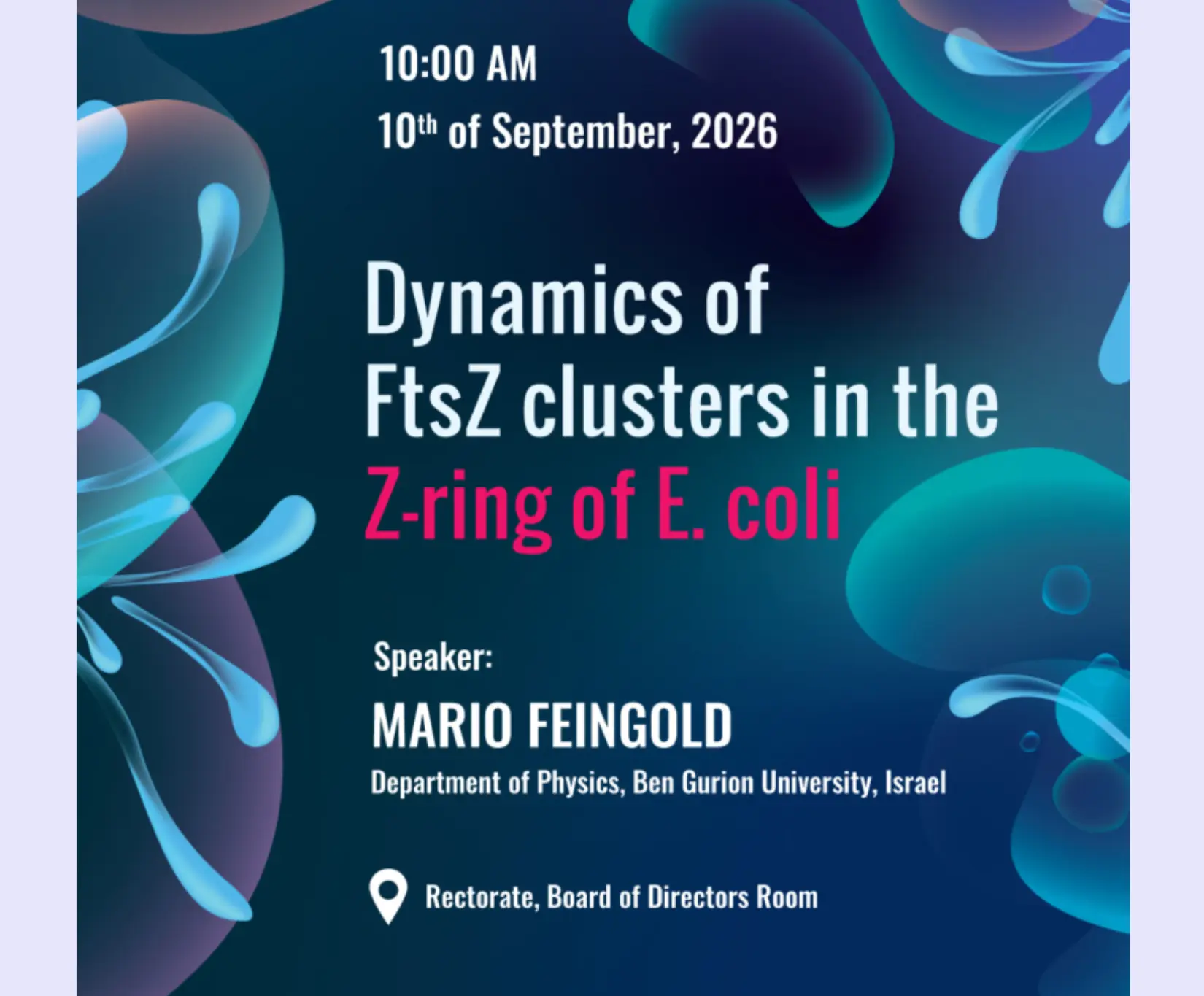
ICUB & ISDS invite you to the seminar ‘Dynamics of FtsZ clusters in the Z-ring of E. coli’, delivered by Prof Mario Feingold, from Ben-Gurion University
Events, Research, Announcements, UB NewsPostări asemănătoare: ICUB invites you to the lecture “Off the beaten track: The Significance of the Black Sea Regions for European Neolithization”, delivered by Dr. Marta Andriiovych from the University of Oxford and the University of...
NEWS
ICUB invites you to the workshop ‘Membrane protein biophysics: experiment and computation’, which will take place on Monday, September 21, 2026, at the Rectorate
Events, Research, International, UB NewsPostări asemănătoare: ICUB invites you to a new workshop on AI & technology, September 10, 2026, at the UB Rectorate: “Embodied meaning and artificial intelligence” ICUB invites you to the presentation “India & Romania:...

CIVIS Language Cafés Return This Autumn: A Multilingual Experience for Students and Members of the University of Bucharest Academic Community
Events, International, UB Student, UB NewsPostări asemănătoare: With the accession of the University of Lausanne, CIVIS expands to 11 members. A new CIVIS university, new members of a community united by a common vision CIVIS invites its academic community to join a new series...
University of Bucharest to Host the Sixth Biennial Conference of the East European Network for Philosophy of Science (EENPS)
Events, Research, International, Announcements, UB NewsPostări asemănătoare: East-Europe premiere: The University of Bucharest, the host of a new edition of the Global Forum on Modern Direct Democracy – Eurosfat 2024 The University of Bucharest at the 2025 EUCEN (European University...
ICUB & ISDS invite you to the seminar ‘Dynamics of FtsZ clusters in the Z-ring of E. coli’, delivered by Prof Mario Feingold, from Ben-Gurion University
Events, Research, Announcements, UB NewsPostări asemănătoare: ICUB invites you to the lecture “Off the beaten track: The Significance of the Black Sea Regions for European Neolithization”, delivered by Dr. Marta Andriiovych from the University of Oxford and the University of...
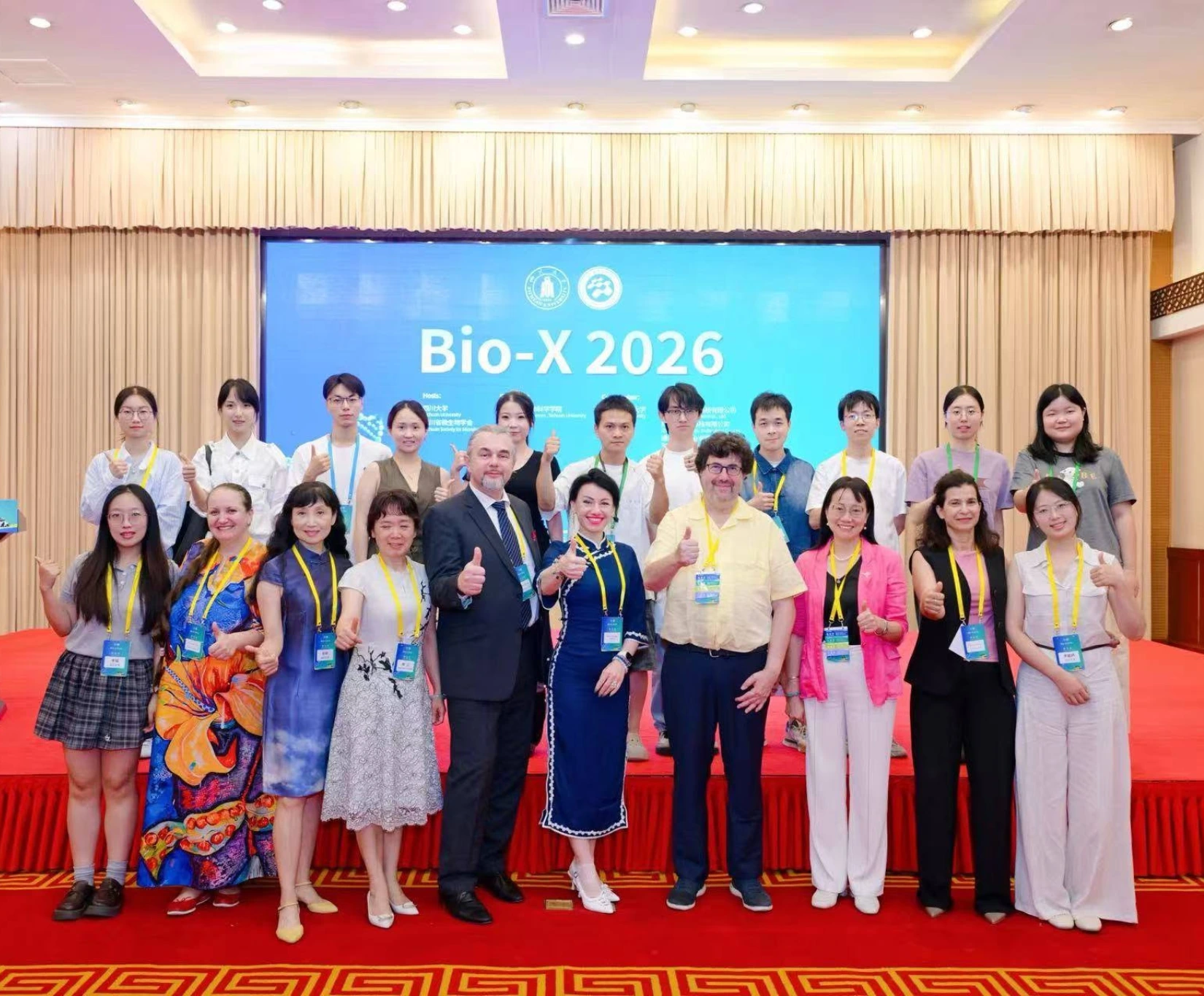
From Bucharest to Chengdu: romanian mycology and a new generation of researchers on the international scientific stage
Events, Research, International, UB NewsPostări asemănătoare: Interested in mycology and related fields? ICUB and the Faculty of Biology invites you to the University of Bucharest Mycology Club (UBMC) The University of Bucharest launches „Harta cercetătorilor UB” (UB...

University of Bucharest Opens More Than 5,800 Places for the 2026 Autumn Admissions Session
Press Releases, UB Student, Announcements, UB NewsPostări asemănătoare: The University of Bucharest offers more than 20,000 places for the 2026 summer admissions session, including over 8,000 state-funded places The University of Bucharest offers more than 20,000 places for the 2026...


