

Tracking Report on Specific Indicators for 2024/2025
Research
- Centre for Environmental Research and Impact Studies, Faculty of Geography
- Centre for Geodemographic Research and Territorial Analysis, Faculty of Geography
- Research Centre for Regional Analysis in Tourism, Environment, and Sustainable Development, Faculty of Geography
- The Centre of Excellence for the Study of Cultural Identity, Faculty of Foreign Languages and Literatures
- Centre of Landscape–Territory–Information Systems, Faculty of Geography
- Centre for Research in Ethnology and Folklore, Faculty of Letters
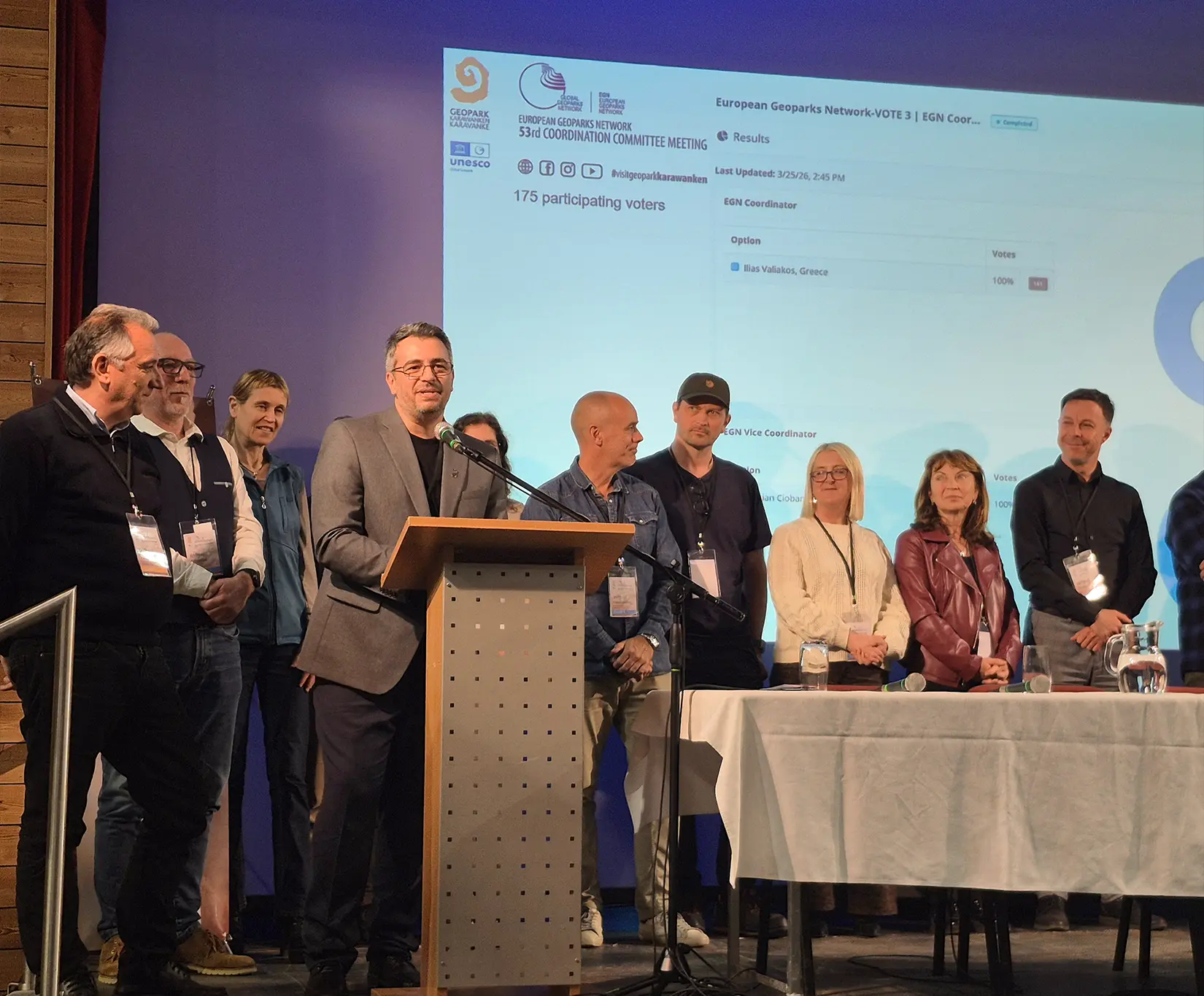
- Hațeg Country UNESCO Global Geopark – Interdisciplinary Research, Education and Societal Impact Platform of the University of Bucharest
- PROWD – PROximity Without Density
- ACCENT – Centre of Excellence for Interdisciplinary Research on Tangible and Intangible Heritage at the University of Bucharest
- ECO-CULT – Sustainable Strategies for Preventing Biodeterioration of Cultural Heritage
- GREEN CONNECT – Open space for urban connection with nature (for research, education, and social interaction)
- CARMINE – Climate-Resilient Development Pathways in Metropolitan Regions of Europe
- GeoAlliance – Driving Sustainable Urban Futures: A Romanian-Norwegian Innovation Geophysical Alliance for Green Transition and SMART City Development
- ReSURCe -Developing a Toolbox for Assessing the Resilience and Sustainability of Urban Housing Models in the Context of Environmental Challenges
Institutional structures
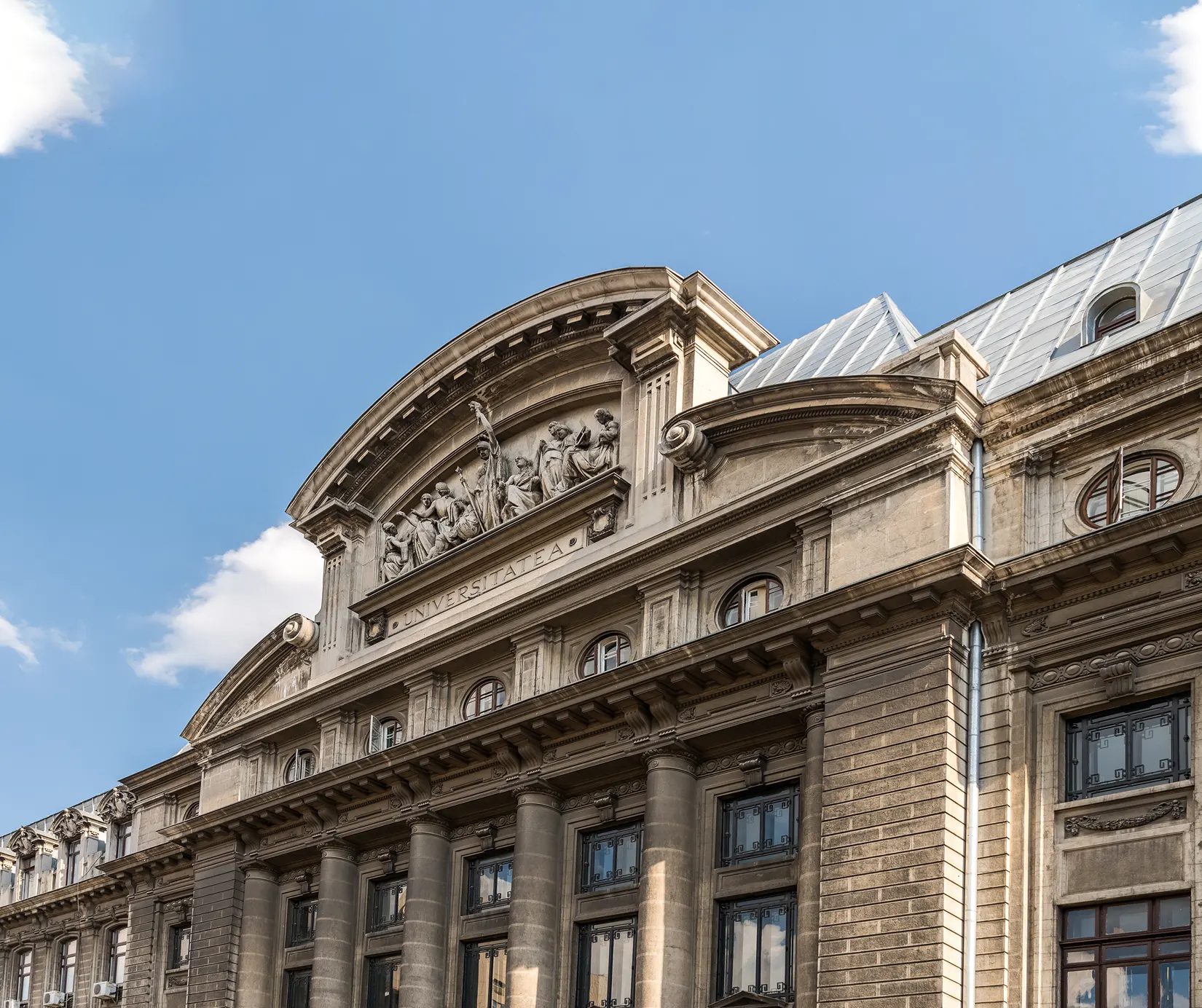
- University of Bucharest’s Museum
- Building Management Department
Support of arts and heritage
Public access to buildings and/or monuments or natural heritage landscapes of cultural significance.
- Access to the University of Bucharest’s premises is allowed to those not part of the university community, provided they comply with the regulations (art. 32 of the UB Charter).
- Thus, buildings and spaces that function as museums, gardens, and parks can be visited according to the schedule published.
- Several university locations include virtual tours and exhibitions, including the museum and the botanical garden.
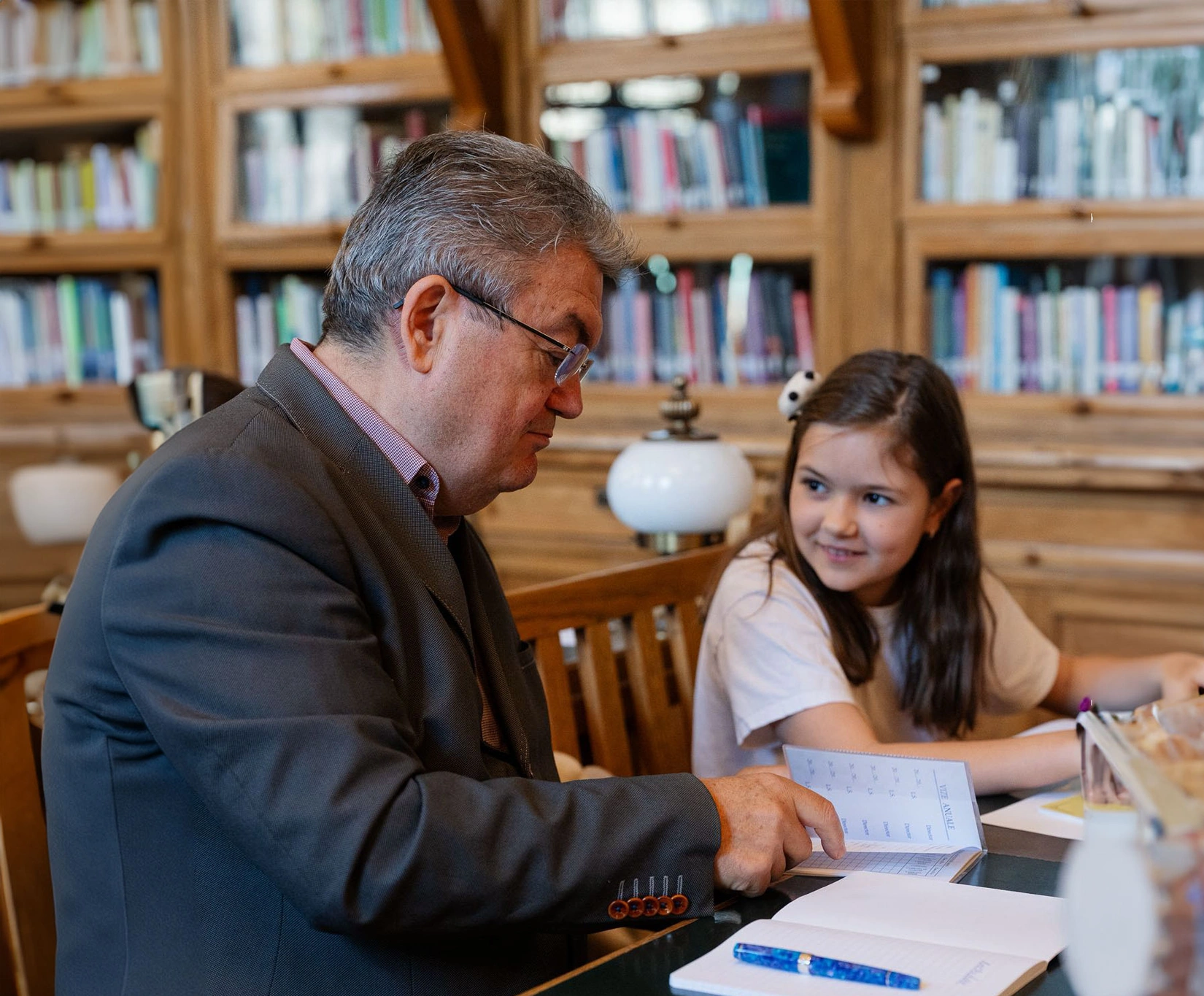
The University of Bucharest provides public library access, including books and publications.
- The “Carol I” Central University Library is a complex organisational structure consisting of the Head Office, the “I.C. Petrescu” Pedagogical Section and 16 subsidiary libraries located in the University of Bucharest. All categories of users, including those from outside the university community, have access to the Central Headquarters based on an access permit. This pass costs about 10 euro/month for people outside the academic community.
- We would also like to mention that virtual libraries have been developed within the University of Bucharest, offering free access to available materials to all interested. Examples of such initiatives include Unibuc CLASSICA or the E-books virtual library, which offers bibliographic resources in 6 fields: exact sciences, life and earth sciences, humanities, theology, social and political sciences, and legal sciences.
- Another remarkable initiative aimed at providing free access to resources is the Digital Archive of the Museum of the University of Bucharest (DAMUB): it makes available to the public unpublished documents in digital format from the heritage of the Museum of the University of Bucharest. DAMUB has both an online and an offline There are 13 funds collections of documents and photographs available, arranged chronologically, and access is free of charge. Moreover, a Digital Photo Library of the University Museum (FDMUB) is also available free of charge.
- Additionally, the University of Bucharest supports access to educational resources through dedicated online platforms that centralise digital learning tools and resources for the academic community. Through its online resources portal, the University provides access to platforms such as Moodle UB, Microsoft 365 for Education, GSuite for Education, and resources available through the Anelis Plus project, including Enformation and Romdidac. The platform also includes guides and training resources designed to support the effective use of online educational tools.
The University of Bucharest provides public access to museums, exhibition spaces and galleries.
- The museum’s heritage, presented in a recently modernised form, reconstructs a history that goes back to the foundation of the Princely Academy of Bucharest (RO: Academia Domească) by the ruler Constantin Brâncoveanu. This institution became an important Centre of education and culture for the South-Eastern European area. There is no charge for visiting the museum. The schedule is available here. The Museum of the University of Bucharest organises a specialised internship for students from all faculties of the University of Bucharest.
- The Museum of the University of Bucharest is included in the Long Night of Museums Route, with various thematic exhibitions. For the 2025 edition, the Museum of the University of Bucharest initiated and launched in collaboration with eight other university museums in Romania, the exhibition “Lesser-known values. From the heritage of Romanian University Museums”. The digital exhibition makes university heritage more visible and accessible to the wider public, bringing the history, traditions and collections of higher education institutions closer to society.
- In 2020, 30 years after the University Square Phenomenon, the University of Bucharest academic community and its partners launched the University Square project – a memory exercise dedicated to the largest anti-communist movement in Eastern Europe since the fall of the Iron Curtain. As part of the project, the Museum of the University of Bucharest organised the digital exhibition 30 Years of the University Square Phenomenon (1990-2020). On the same occasion, the UB Rectors’ Gallery was inaugurated, which includes 36 drawings in sanguine on background paper, size 60 x 49 cm, made by Daniela Chirion, a plastic artist, and which can be admired by those interested in the dedicated website. More information about the project is available here.
- There is also a virtual tour of the museum that allows viewing of the exhibition space. In the museum’s offer, there are also over 20 digital exhibitions accessible here, in addition to its permanent exhibition and the temporary exhibitions organised physically on different occasions.
- The University also supported public access to culture through more than 20 open-access art exhibitions organised on its premises or in collaboration with members of the academic community. An illustrative example in this regard is the art exhibition addressing key issues of contemporary society, including the promotion of tolerance, environmental awareness, feminism, solidarity, and peace. Arta Sunt.Eu is designed to evoke emotion and stimulate creative thinking. The exhibition features a series of outdoor murals as well as the installation of more than 30 artworks within the premises of the Faculty of Philosophy.
- The Botanical Garden of the University of Bucharest also offers the general public access to the Botanical Museum and virtual exhibitions such as Emotions in Images or virtual tours.
- In 2025, UB partnered with the National Geological Museum for the European Researchers’ Night 2025, to make science more accessible to the public through free experiments, demonstrations and discussions between specialists.
The University of Bucharest provides public access to open spaces and green spaces.
- The “Dimitrie Brândză” Botanical Garden of the University of Bucharest offers access to its outdoor spaces, the Botanical Museum, and the Exhibition Greenhouses + Tropical Forest Pavilion to all those interested. Access for UB students and employees is complimentary, while pensioners, pupils and students benefit from reduced tickets. More information about the UB Botanical Garden is available here. The material base available to the visitors is continuously improved through initiatives, such as the Green Connect Project– Open Space for Urban Connection with Nature, which now has several editions.
- The UNESCO International Geopark Tara Hațegului of the University of Bucharest offers free access to all the visiting points: the exhibition Balauri, Dragoni, Dinozauri (Hațeg Town); the Science and Art Centre (General Berthelot Village); the House of Volcanoes (Densuș Village); the House of Dwarf Dinosaurs and the House of Traditions (Sîntămăria Orlea Commune, Sînpetru Village); the House of Miniatures (Totești Village), programme available here.
The University of Bucharest contributes to local arts in various forms.
- The University of Bucharest, through Hațeg UNESCO Global Geopark, is a partner in The Big Green, a four-year Creative Europe project that brings together cultural and scientific actors to explore how the cultural and creative sectors can inspire and drive the transition towards a sustainable, climate-conscious society. The project is designed to strengthen European networks of environmentally-aware cultural organisations, promotes ecological thinking as a source of artistic innovation, and builds a positive, creative narrative around climate change and sustainability. In its second year, the focus was on “Soil”, inspired by the rich geological and natural heritage of the Hațeg UNESCO Geopark. Through a collaboration between the University of Bucharest, the Geopark team and cultural-creative partners, artists engage with scientific knowledge (geology, pedology, ecology) and local communities to create exhibitions, performances and workshops.
- The University of Bucharest Choir is a permanent cultural initiative open to students, alumni and staff, including participants without formal musical training. In December 2024, the Choir organised the “Christmas Blessings” concert in the Aula Magna of the Faculty of Law, with free admission. The event marked the 160th anniversary of the University of Bucharest, the 75th anniversary of the Choir and the 35th anniversary of the 1989 Revolution, bringing together students, alumni and UB staff and featuring Romanian and international Christmas music. In May 2025, the Choir also performed an open-air concert during the first festivALL UB, held at the “Dimitrie Brandza” Botanical Garden. Access to the festival was free, and the event opened the University’s cultural and educational spaces to a wider community through music, theatre, literature, exhibitions and other public activities.
- The University of Bucharest supported access to cultural education and local arts by facilitating special-price tickets for members of the UB community to Art Safari 2025 – “Keep the art beat”. Through this initiative, students, teaching staff and employees could access the exhibition at a substantially reduced cost, encouraging participation in cultural life and exposure to both Romanian artistic heritage and contemporary art.
- Faculty-level initiatives at the University of Bucharest also contribute to public access to culture and civic education. Through activities such as theatre performances hosted in academic spaces, including “Miceliu” at the Faculty of Political Science, the University supports dialogue on contemporary social issues and encourages cultural participation beyond formal teaching. Another example comes from the Faculty of Foreign Languages and Literatures, where during the Freshers’ Week FLLS, students were invited to a theatre event.
- In March 2023, the members of the University of Bucharest community were invited to four theatre performances organised in partnership with the students of the National University of Theatrical and Cinematographic Arts “I.L. Caragiale” (UNATC) in Bucharest. The performances aimed to offer a cultural experience to the academic community and the general public. Each representation showcases a different theatrical work, exploring various themes and providing a platform for students, actors, and other participants to express their talents. This continued in 2024 when the “Dimitrie Brandza” Botanical Garden hosted “The Last Night of Love, the First Night of War” event, part of the “Theatre for BAC” project, and acted with students from the Theatre Pedagogy Master’s within the I.L. Caragiale National University of Theatre and Film in Bucharest (UNATC).
The University of Bucharest and the academic community members support and implement projects to record and preserve intangible cultural heritage as illustrated in the following examples.
- At the ICUB Institute, the ArchaeoSciences Platform was developed to facilitate the complex, interdisciplinary and integrative approach of the archaeological and cultural heritage by conducting research and training in archaeological sciences and material and immaterial cultural heritage (mobile and immobile) fields.
- In the same direction of preserving intangible cultural heritage, we mention one of the projects of the Țara Hațegului Dinosaurs Geopark of the University of Bucharest. It is the project “Places with stories in the Dinosaurs Valley, in the Țara Hațegului Dinosaurs Geopark” was initiated precisely because of “the need to enhance the value of elements of intangible cultural heritage belonging to the communities in the Geopark territory“. Further details about the project and its activities are available here.
- The geopark includes several initiatives related to Geoturism.
- Another initiative to record and preserve the local community’s heritage was carried out by the Museum of the University through the project “Urban Exploration and University Heritage in Cotroceni“. The exhibition is available online.
- The Centre for Research in Ethnology and Folklore (CERC) of the Faculty of Letters contributes to the identification, documentation, archiving and interpretation of intangible cultural heritage. Its activities include ethnographic field research, the collection and preservation of textual, photographic, audio and video documentation, as well as expertise and support for communities involved in safeguarding and transmitting traditional cultural practices.
- In September 2025, the Faculty of History organised the third edition of the Summer School on Heritage and Oriental History, entitled “Oriental History and Living Heritage: Cultural Dialogues in Contemporary Context”. The programme included a dedicated section on rural intangible heritage and local communities, addressing the preservation, interpretation and contemporary valorisation of living cultural heritage.
- The University of Bucharest, through its representatives Prof. Daniela Dumbrăveanu and Anca Tudoricu, teaching staff of the Faculty of Geography, participated together with the Universitur Association in the initial training phase of the European strategic partnership “LUDAMUS! Promoting cultural heritage through edutainment experiences”. The UB team was involved in the Cronica Universitur initiative and kicked off the training phase with two sessions on European and international cultural heritage and heritage interpretation tailored to the project’s purpose. More details about the project can be found here. Further information on the Universitur Chronicle is available here.
Sustainable practices
According to Article 128(3) of Higher Education Law no. 199/2023, full-time students enrolled in accredited higher education institutions, up to the age of 30, are entitled to a 90% reduction on local public transport, metro, domestic road and rail transport and domestic naval transport. For 2025, specific temporary provisions apply, as students benefit from a 90% reduction on local public transport and metro services in the locality where their higher education institution is based, while the 90% reduction for domestic road and rail transport applies to routes between their place of residence and the locality of their university. At the University of Bucharest, eligible full-time students up to the age of 30 may request reimbursement of 90% of the cost of metropolitan STB public transport passes, in accordance with the University’s reimbursement procedure.
UB employees who commute between the faculties and the rectorate are refunded for the tickets.
Bicycle parking facilities have been set up at the University of Bucharest to encourage students and staff to use this means of transport.
Annually, at the University level, the Institutional Sustainability Service organises a week-long walking competition between all members of the academic community, with prizes for the first 9 positions.
Given the wide-ranging benefits of telework, in early 2022, the work was regulated by a resolution of the Executive Board of the Administrative Council. Additionally, the UB Internal Regulations (art.75) include further for implementing remote working. Finally, employees with children can request remote working one day a week.
UB teaching staff receive a 50% discount on the night rate/room in the Gaudeamus Guest House. Upon request, in exceptional situations and depending on availability, employees can also receive accommodation in student dormitories. Depending on availability, UB employees can also request and receive a room in a student dormitory (conditioned on their age: below 35 and based on not owning property in Bucharest).
The University of Bucharest offers affordable housing for students.
- As of the 2024/25 academic year, students had approximately 4,500 accommodation places in 15 dormitories. This number covers almost 80% of the required places. Accommodation in student hostels is based on the principle of previous academic performance, but 15% of the hostels are awarded based on social or medical criteria. Additionally, students may require financial aid to cover their accommodation expenses in private hostels.
- The accommodation fees for budget students varied between 200 lei – 250 lei (40-50 EUR). According to art. 25 of the Methodology for accommodation in UB dormitories, students, children of teachers or auxiliary teaching staff, students from children’s homes or foster care, students with severe disabilities and their companions, as well as students orphaned by one or both parents, benefit from free accommodation during the academic year, except during holidays, until they reach the age of 35.
- UB students benefit from a 50% discount on the accommodation/night rate in the Gaudeamus Guest House. Similarly, foreign UB scholarship students, UB collaborators, UB scholarship holders and participants in actions organised by UB student associations benefit from reduced rates for accommodation at the Academic Guest House.
The University of Bucharest administers several spaces, some designed exclusively for pedestrians. Here we mention the spaces in the Botanical Garden “Dimitrie Brândză”, in the UNESCO International Geopark “Țara Hațegului”, as well as the garden of the Faculty of Law or the spaces in the campus of the Rectorate.
The scientific interests and research projects implemented by the Centre for Geodemographic Research and Spatial Analysis (CCGAT) address several issues relevant to sustainable urban development and local communities. Current research themes include:
- urban and housing policies and their impact on residential mobility, segregation, gentrification and urban expansion;
- marginal urban areas and informal settlements;
- deindustrialisation and urban regeneration;
- land use and quality of life in the Bucharest–Ilfov metropolitan area;
- socio-spatial patterns and processes within Bucharest.
The University of Bucharest also works directly with local authorities and communities on urban planning and development. In February 2025, the Centre for Environmental Research and Impact Studies organised the Urban Living Lab Tei-Colentina, within the GREEN-INC project. Representatives of the Bucharest Municipality, the Bucharest Environmental Protection Agency and DGASPC Sector 2 worked alongside researchers, civil society organisations, private-sector representatives and local residents to identify environmental, socioeconomic and spatial needs and co-create scenarios for a more inclusive and sustainable development of the area.
Since 2025, the University of Bucharest has also implemented ReSURCe -Developing a Toolbox for Assessing the Resilience and Sustainability of Urban Housing Models in the Context of Environmental Challenges, which develops methodological tools to support the planning of more resilient and sustainable current and future residential areas.
Previously, the University coordinated the project AFFECTIVE-PRS – The affective economies of private renting: Understanding tenants and landlords in postcommunist Romania (2022-2024). The project examined access to private rental housing, tenant-landlord relations and inequalities within Romania’s rental market, contributing evidence on housing affordability and the challenges faced by vulnerable households. In October 2024, ICUB organised a dedicated workshop bringing together discussions on the experiences of tenants and landlords in Romania.
In 2024, the University of Bucharest signed the contract for the construction of an integrated vocational, secondary, and higher education campus in Focșani, in partnership with “Alexandru Ioan Cuza” University of Iași and the Vrancea County Council. Construction works have already commenced, and the campus will be developed on a site covering more than two hectares. It will comprise of four buildings: a main academic building featuring classrooms, a lecture hall, a library with reading rooms, digital workshops, and laboratories; a student residence hall; a canteen; and a sports facility. The campus will incorporate renewable energy solutions, including photovoltaic panels and electric vehicle charging stations, as well as its own parking area equipped with 12 charging points for electric vehicles. The campus will be equipped with educational resources, modern furnishings, practical training facilities for secondary school pupils and university students, and digital learning spaces, thereby providing the infrastructure required to support high-quality vocational and academic training and to enhance learners’ professional development opportunities.
The design of the new buildings and the refurbishments carried out take into account sustainable construction and refurbishment standards. These aspects are monitored by the UB’s Technical Directorate. For example, in 2022, the University of Bucharest announced its intention to invest in the construction of a new student residence hall in the Grozăvești Campus in Bucharest. The facility will provide modern accommodation spaces, accessible to students with disabilities, and will include study rooms and leisure areas that meet the highest standards of safety, quality and sustainable standards.
In 2026, the University of Bucharest obtained the building permit for this project, which involves the development of a facility with a gross floor area of nearly 12,000 square meters and a height regime of Basement + Ground Floor + 7 Upper Floors + 2 Setback Floors. The project will add 476 new accommodation places to the University’s housing capacity and will comprise 238 double rooms equipped to modern standards.
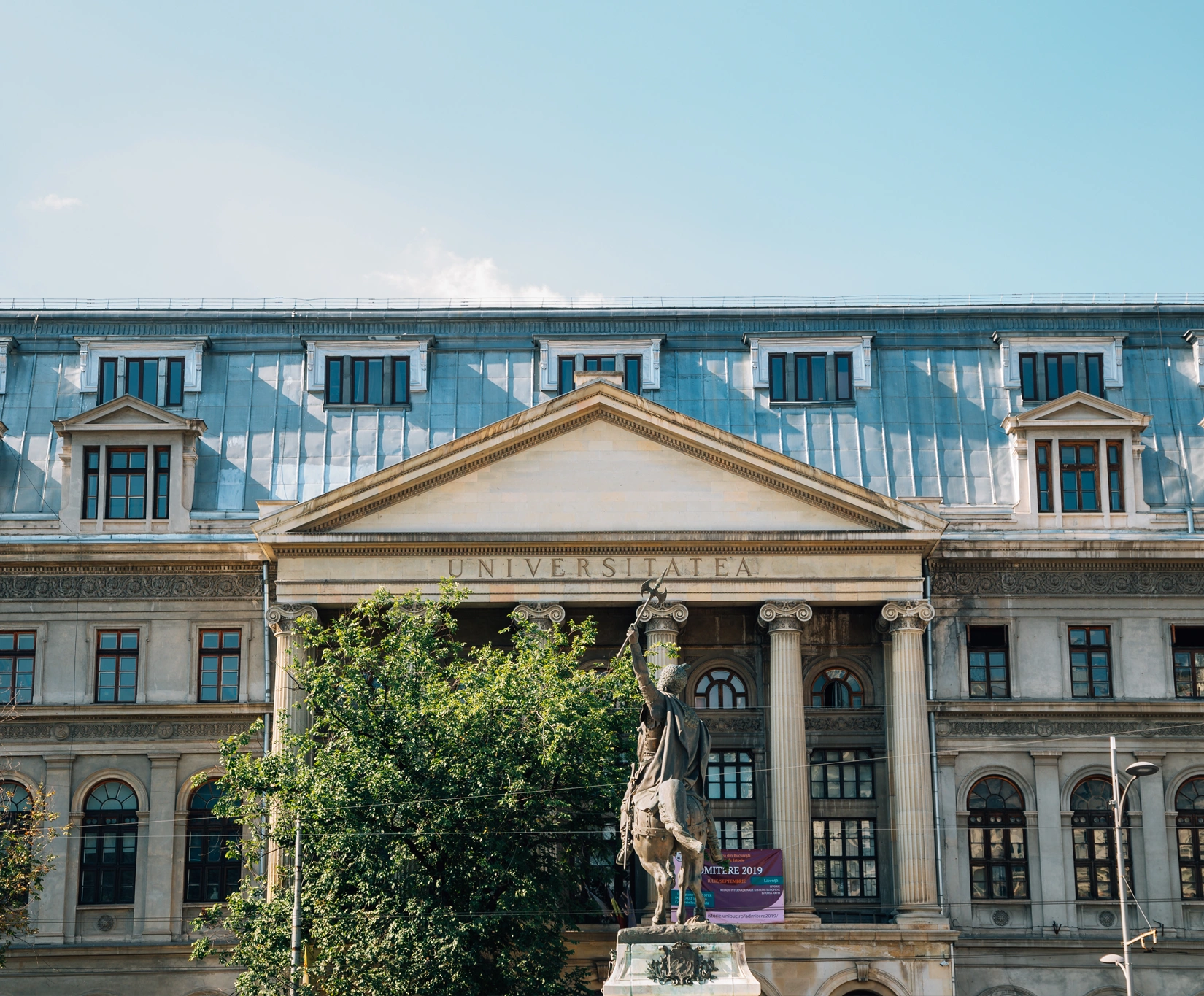
Over the years, the University of Bucharest has valorised disused spaces either by constructing new buildings (e.g. the Gaudeamus Hotel built on the site of the former university printing house) or by arranging relaxation areas for the academic community. As many of the buildings of the University of Bucharest are historical monuments, permanent consideration is given to their preservation and enhancement for future generations.
Marc, 21 – International Forest Day
March, 22– International Water Day
April, 22 – International Earth Day
May, 10 – Birds and Trees International Day
May, 15 – International Day of Climate Action
May, 22 – International Biodiversity Day
June, 5 – World Environment Day
June, 8 – World Oceans Day
June, 21 – World Sun Day
September, 23 – World Cleanliness Day
October, 1 – World Habitat Day
October, 27 – Sustainability Day in Romania
October, 31 – International Black Sea Day
December, 5 – International Soil Day
December, 11 – International Mountain Day
- Department for sustainable development in Romania
- The national strategy for the Sustainable Development of Romania 2030
- United Nations Department of Global Communications
- United Nations – Sustainable Development Goals
- United Nations Development Programme
- United Nations – Agenda for Sustainable Development
- European Commission – Sustainable Development Goals
- Eurostat – Sustainable Development Goals Overview
- European Commission – Sustainable Development Goals – Visualisation tools
- Times Higher Education – Impact Rankings